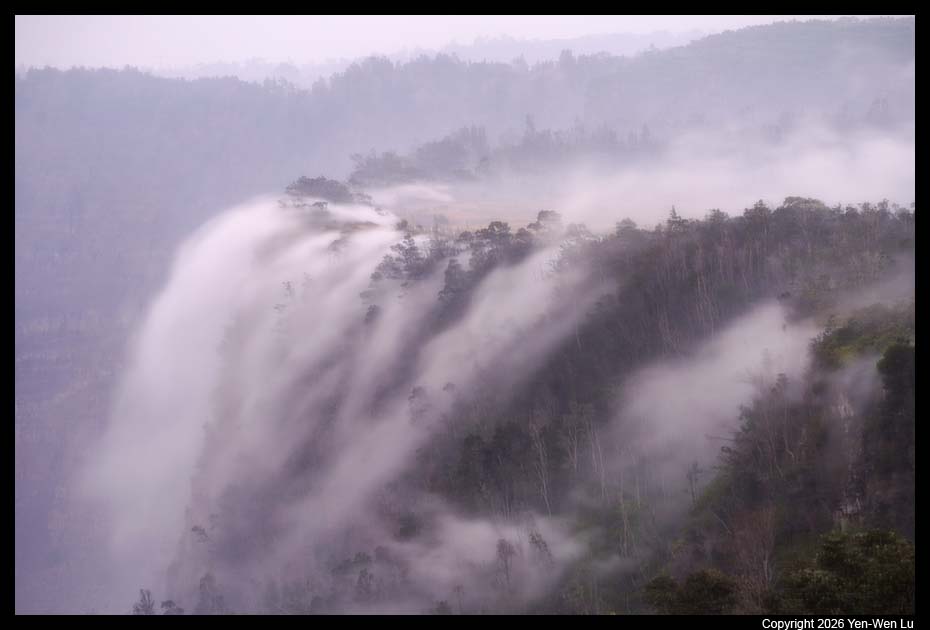
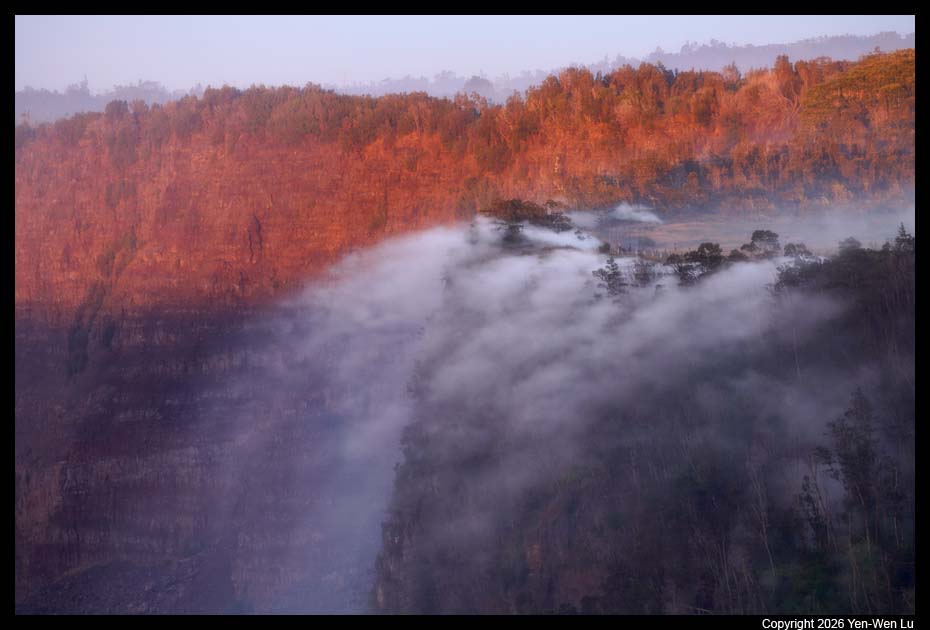
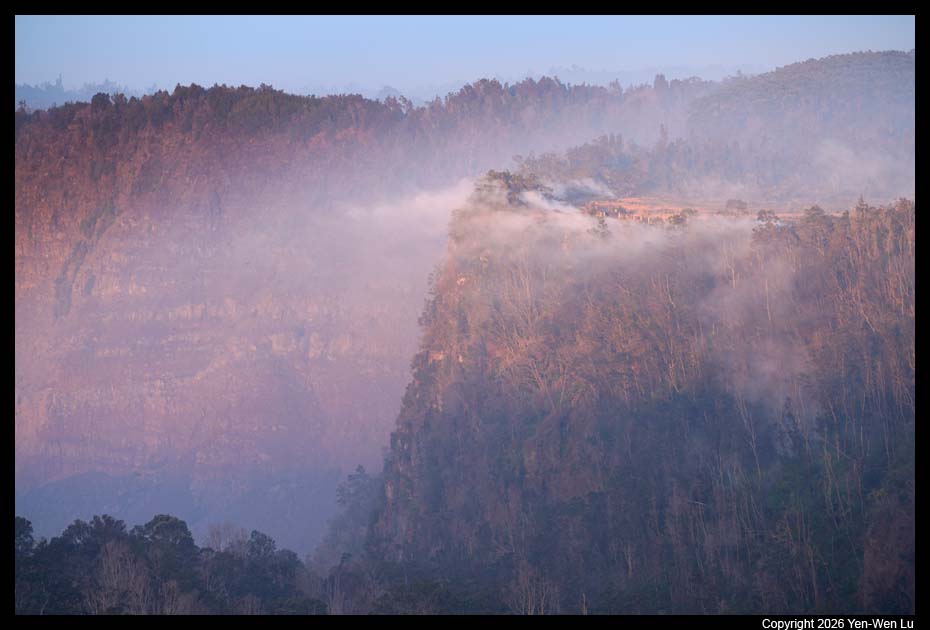
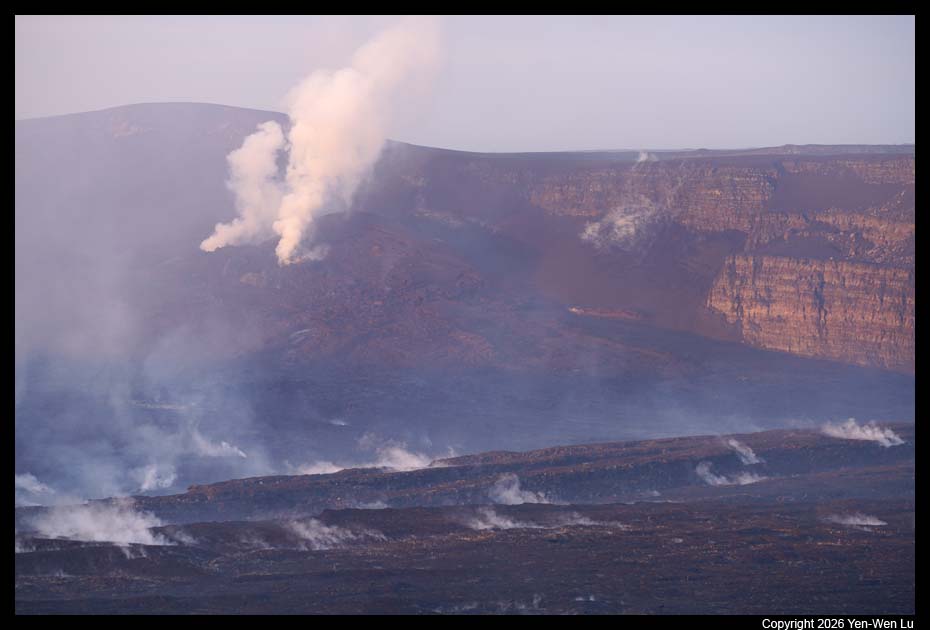
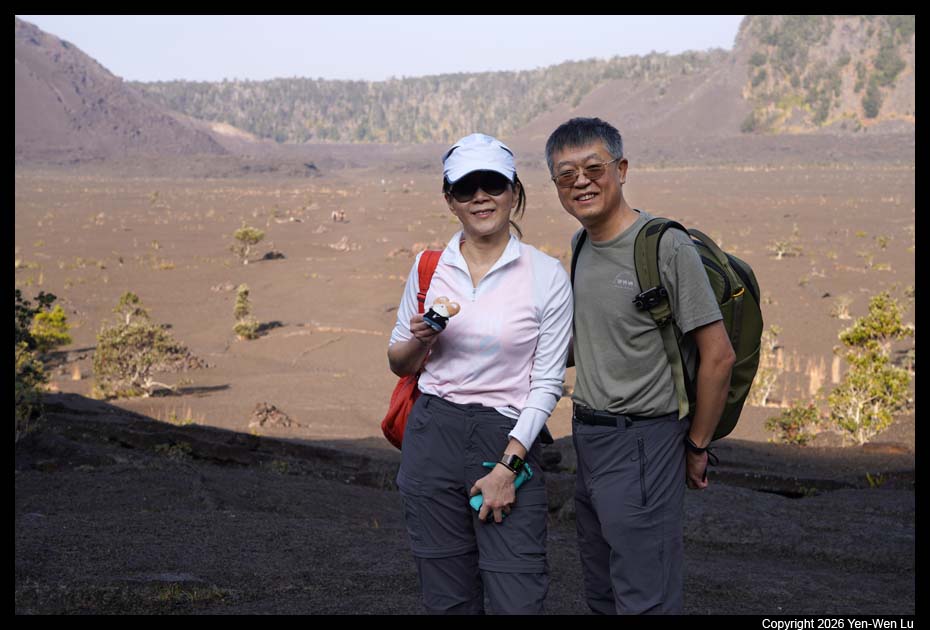
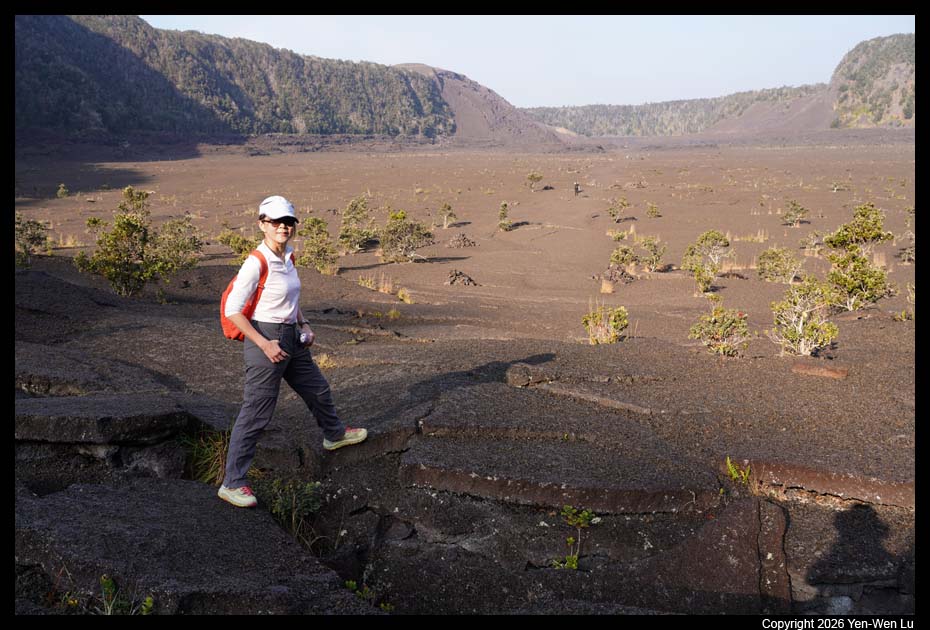
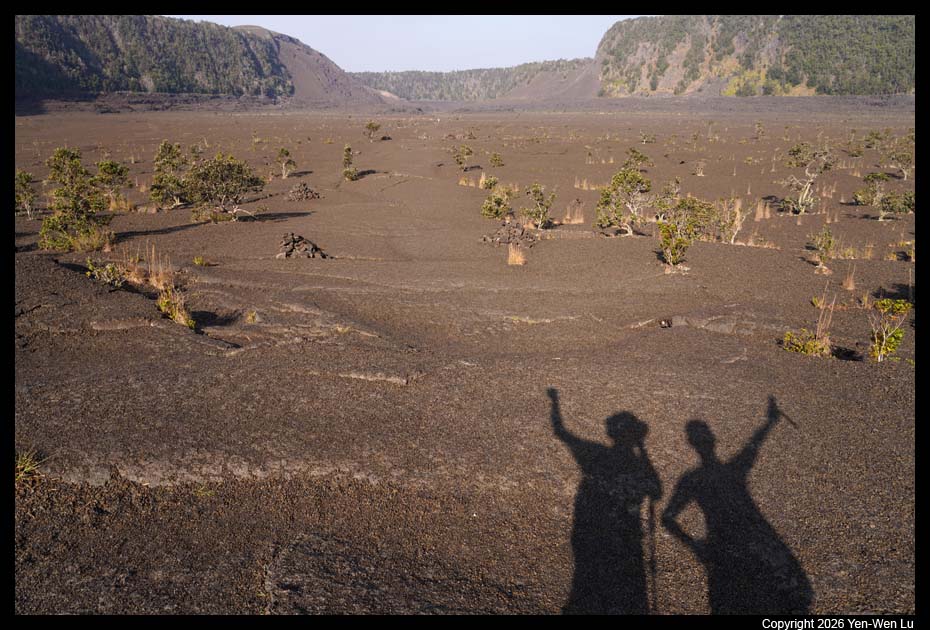
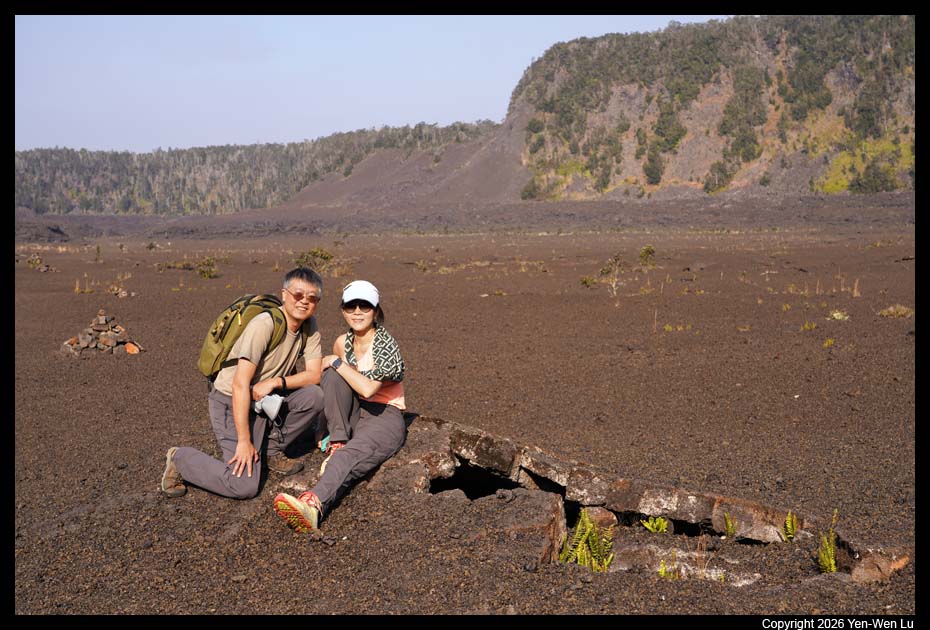
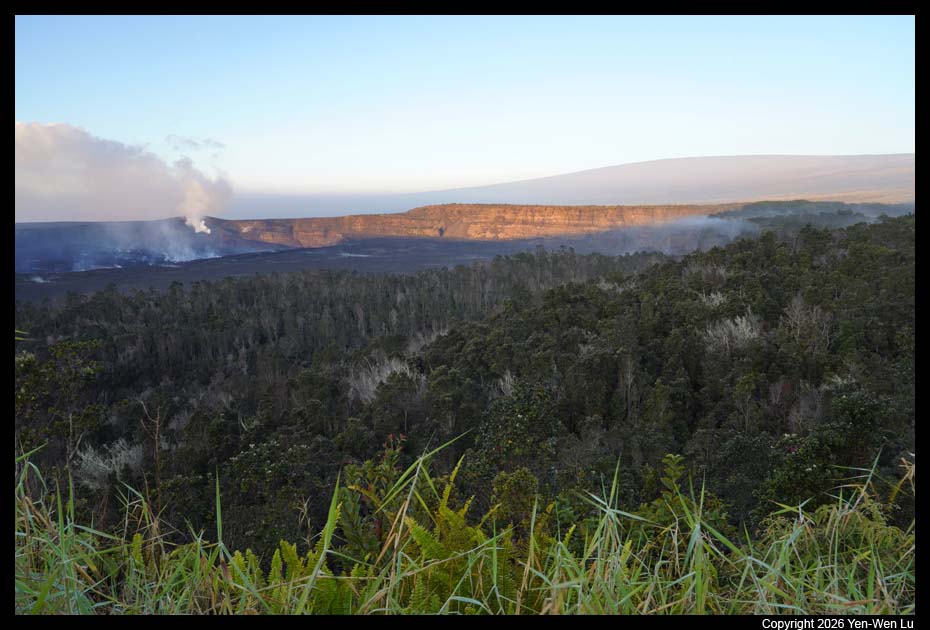
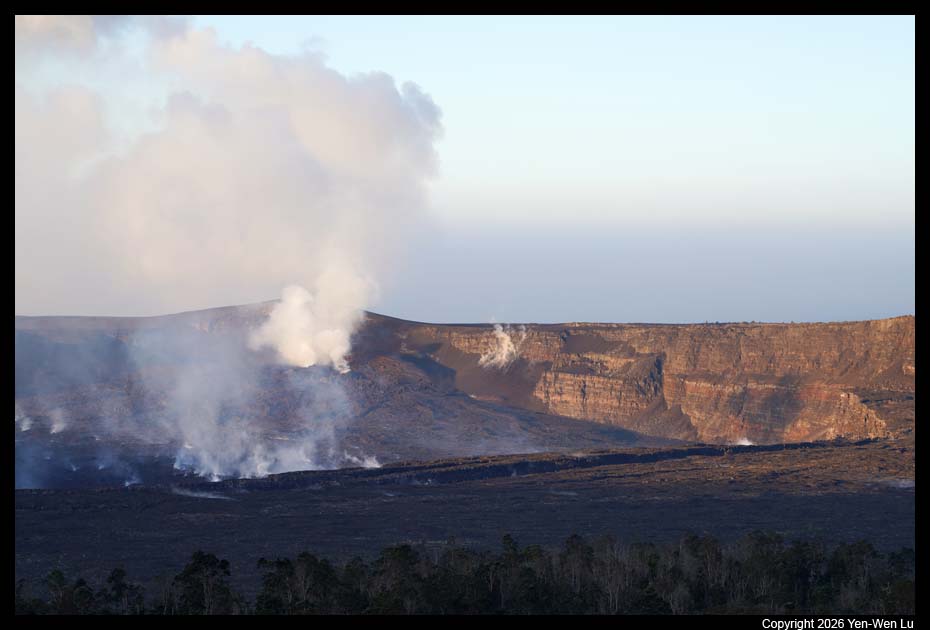
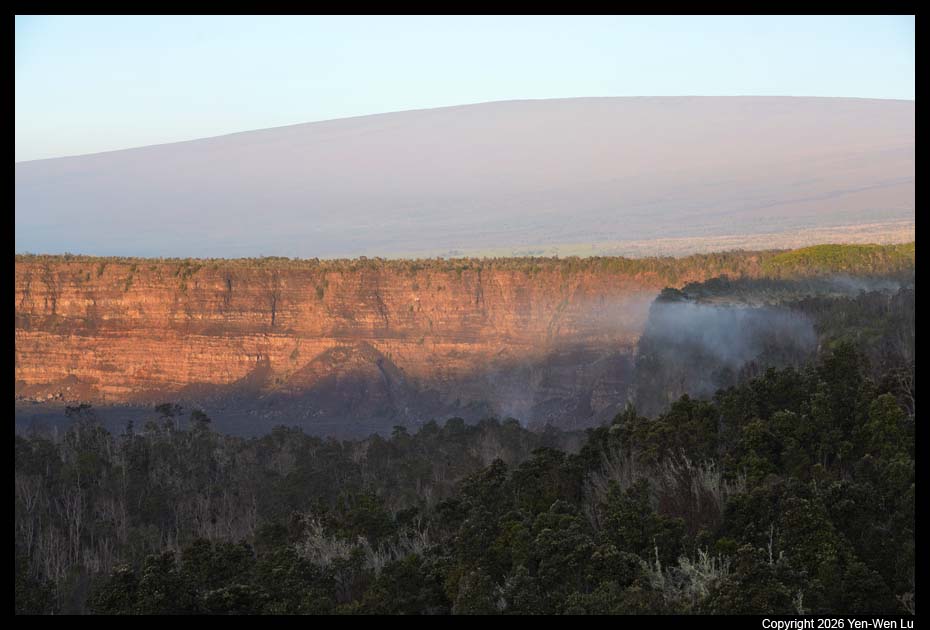
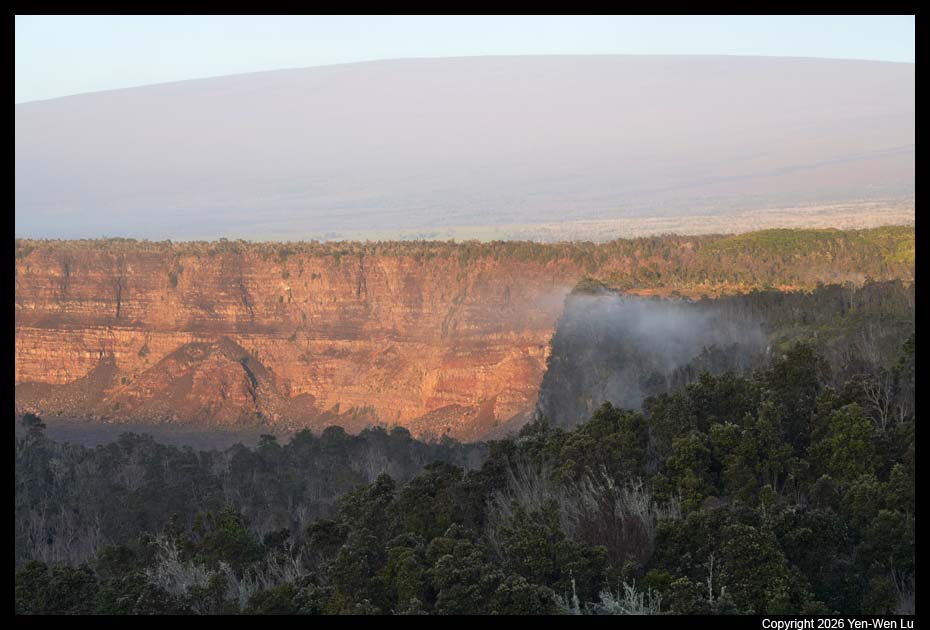
Hawai‘i Volcanoes National Park, located on the Big Island in the state of
Hawaii, protects some of the most unique geological, biological, and cherished
cultural landscapes in the world. Extending from sea level to 13,680 feet, the
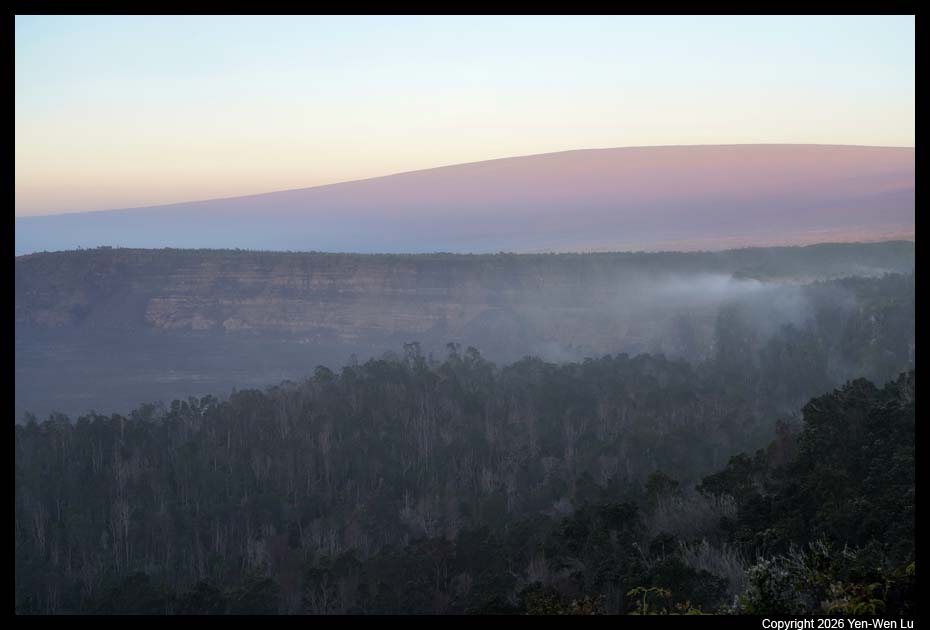
park encompasses the summits of two of the world's most active volcanoes -
Kīlauea and Mauna Loa - and is a designated International Biosphere Reserve and
UNESCO World Heritage Site. Kīlauea has been erupting episodically since
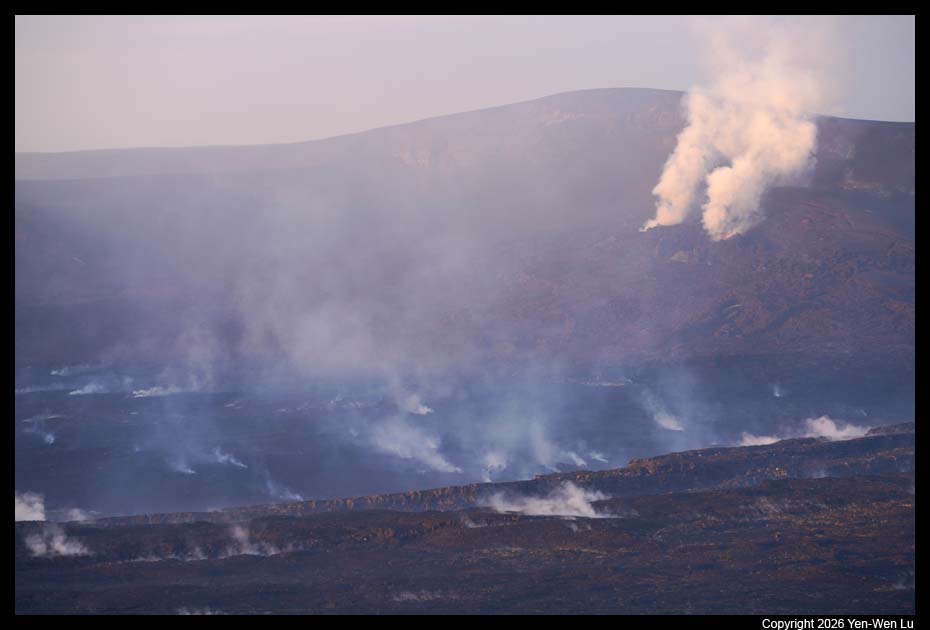
December 23, 2024, primarily from two vents (north and south) in Halema‘uma‘u.
There were
41
eruptive episodes by the end of January 2026.
Getting there ...
I have been monitoring the Hawaii volcanic activities since early 2025, and
seriously considered to come to the Big Island to witness the spectacular
events. When I started to plan the trip in November 2025, I booked 2 nights (1/29, 1/30) at the Volcano House by the crater rim because it
was the only availability for a room with crater views around the end of January
2026. Unfortunately, Kilauea erupted 5 days ago (on
1/24/2026), so it was not possible to see the eruption during our trip this
time. We had a morning flight from SFO and arrived at the Kona Airport
(KOA) at about noon. We got our rental car at about 1:30PM and started to
drive to the Hawaii Volcanoes National Park. With a grocery stop near
Hilo, we arrived at the Volcano House at about 4PM.
Day 1 (1/29) ...
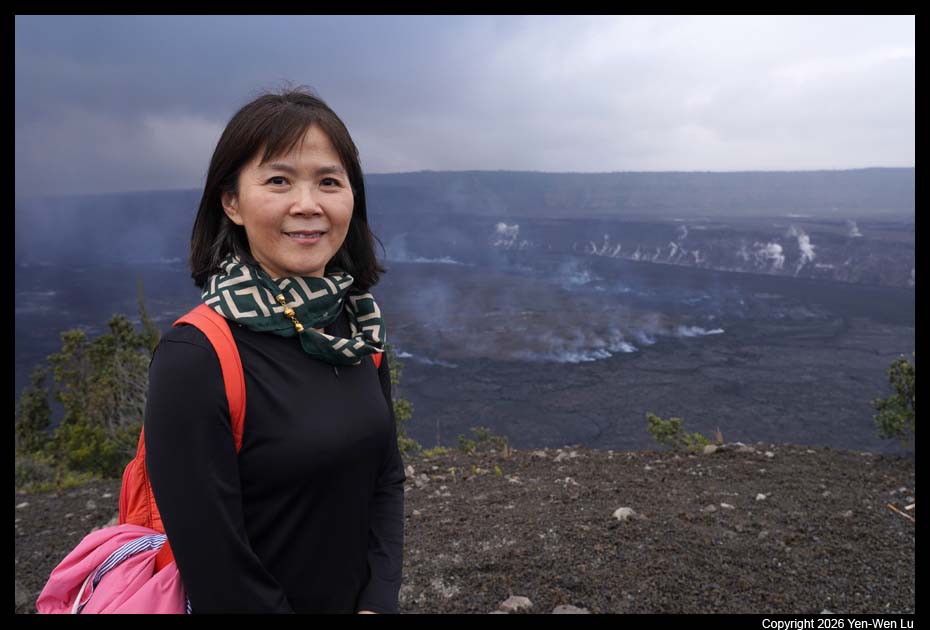
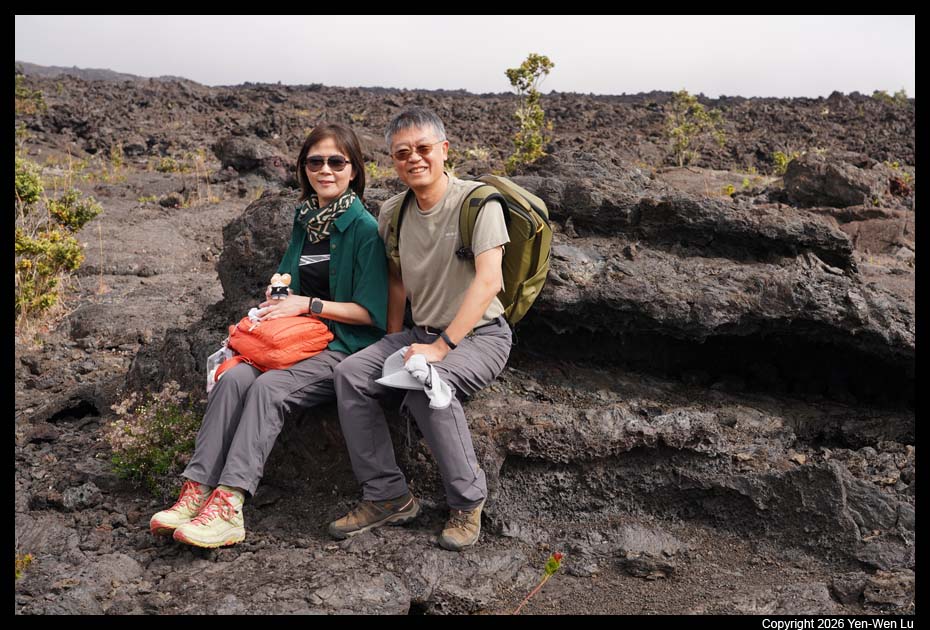
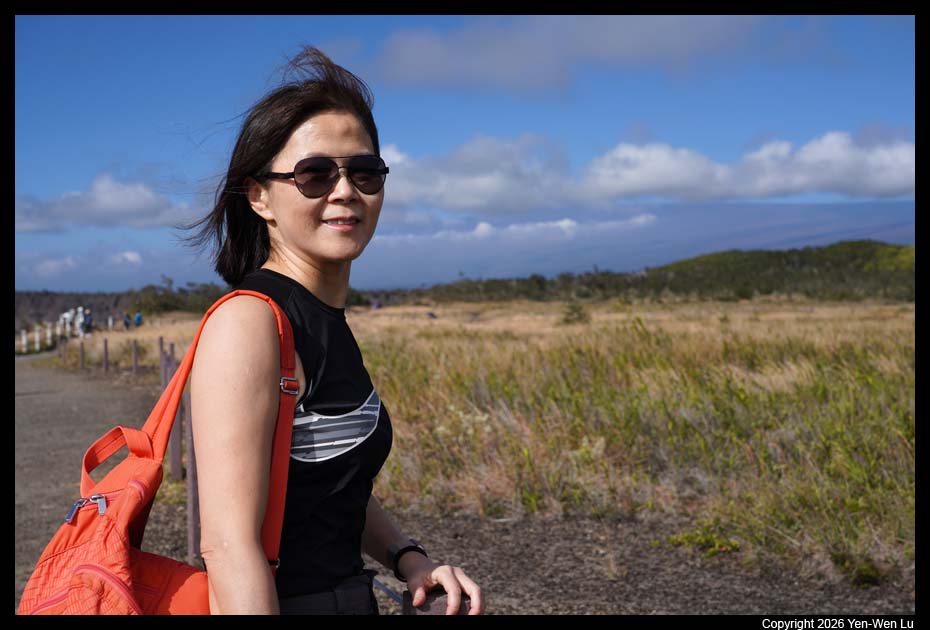
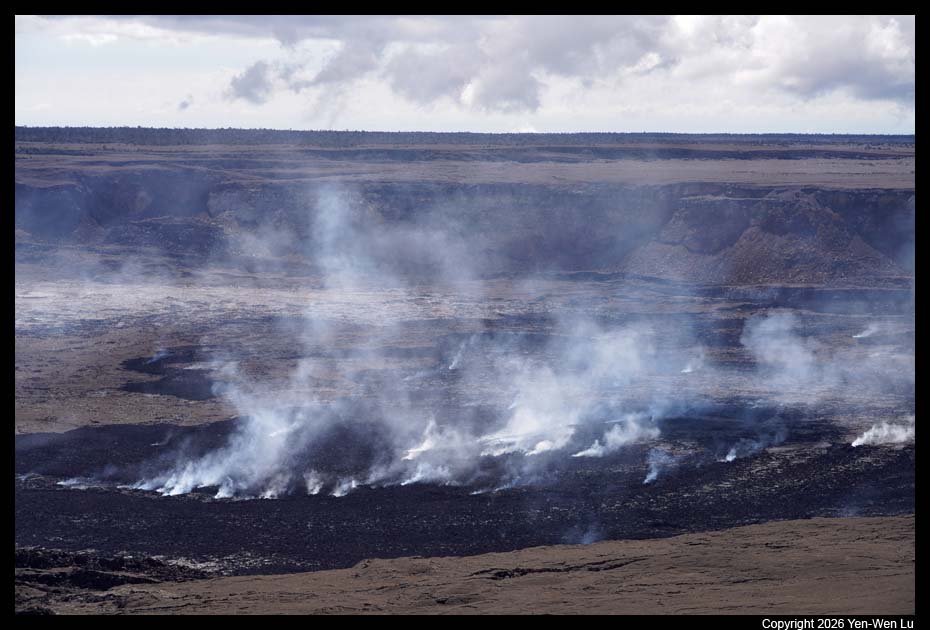
- Old Crater Rim Drive Trail
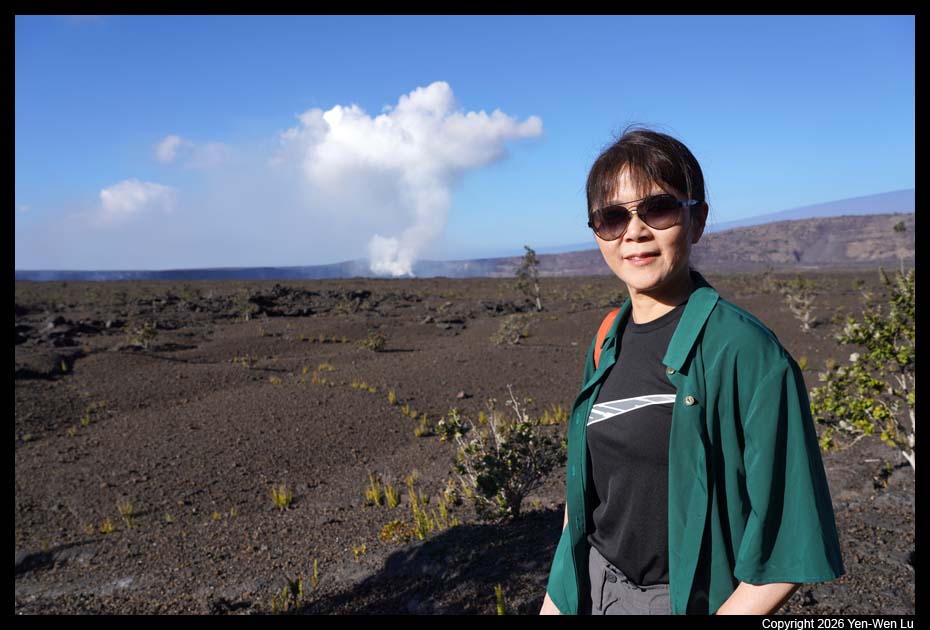
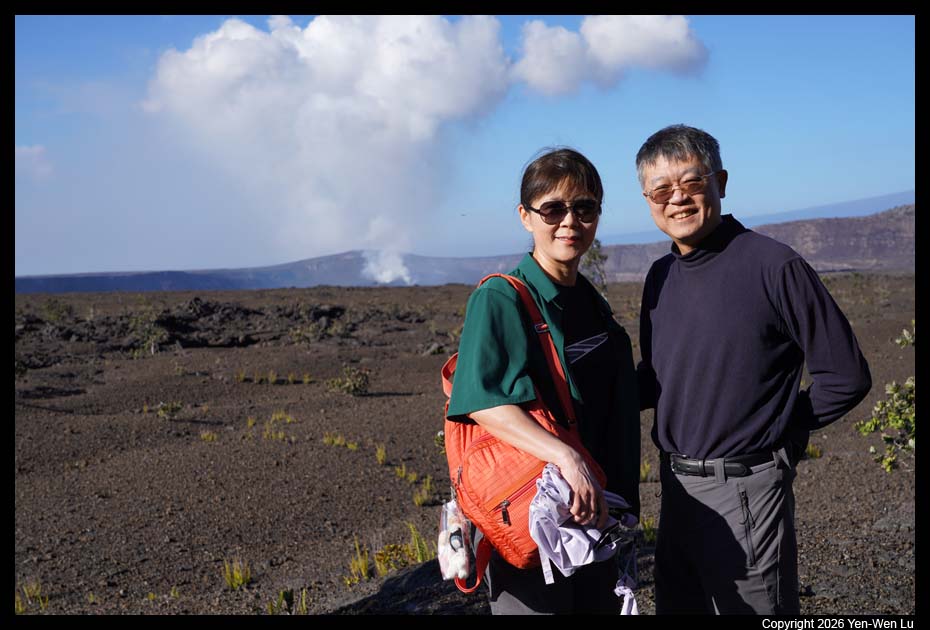
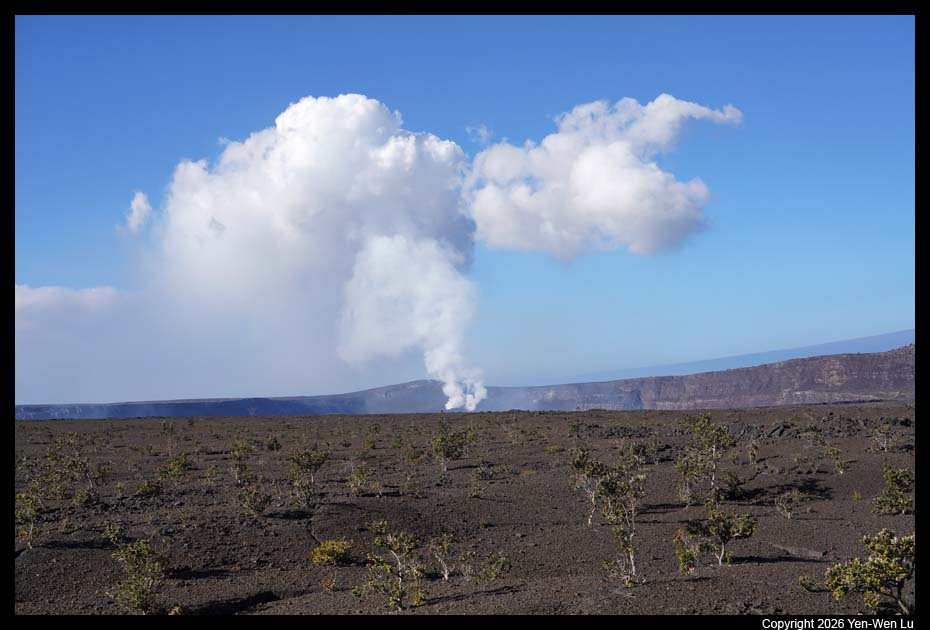
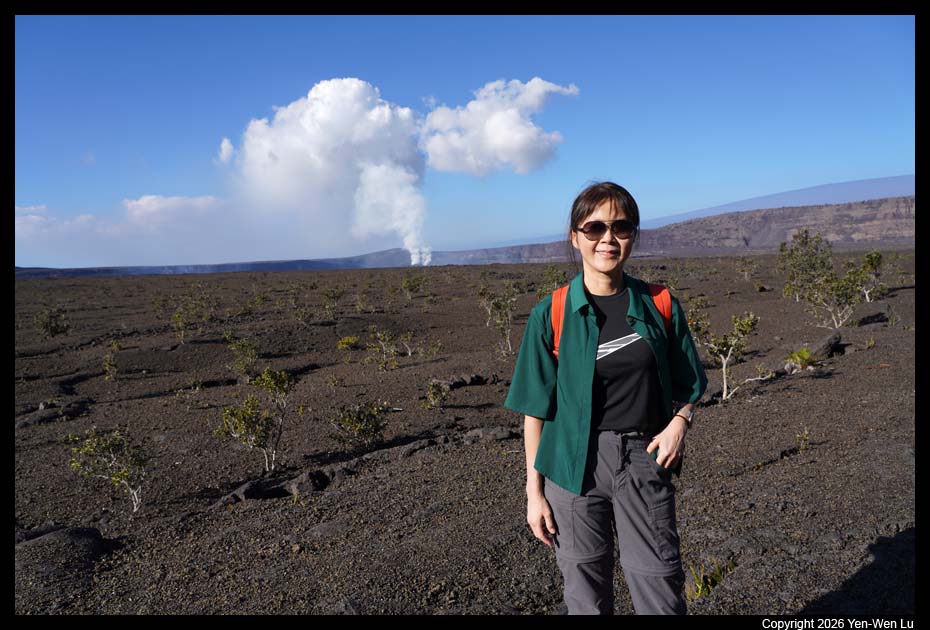
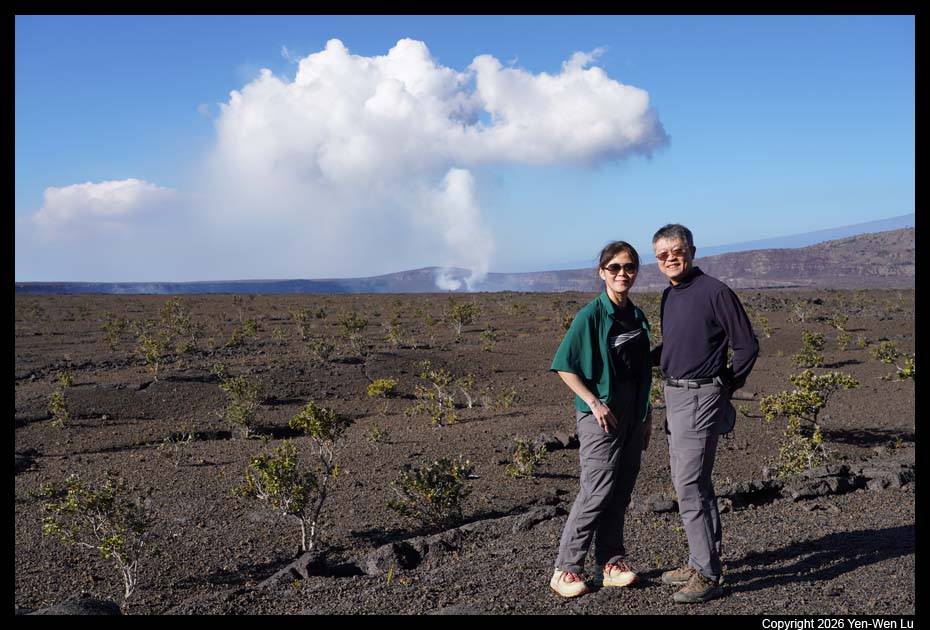
We drove to the Devastation parking area
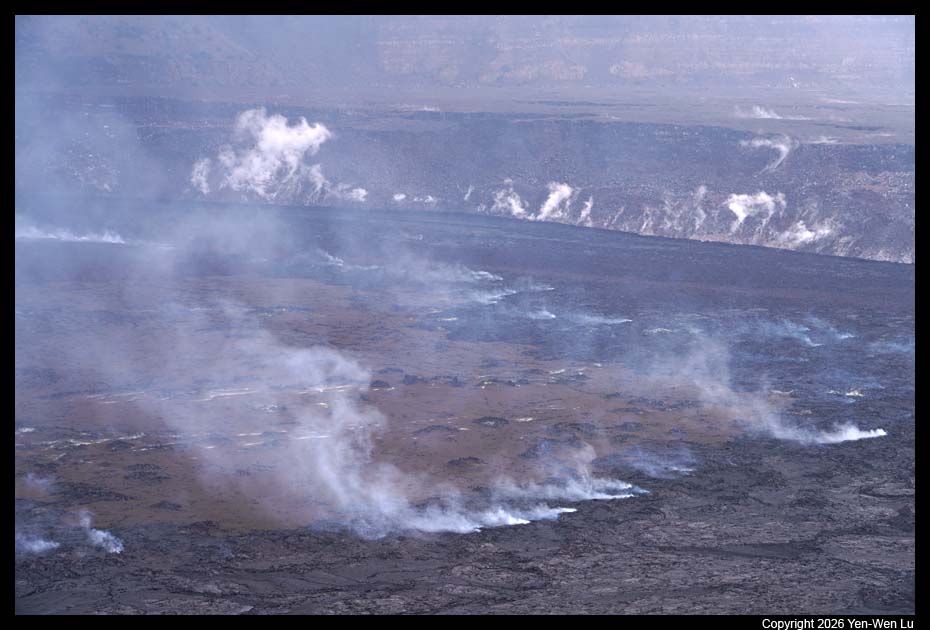
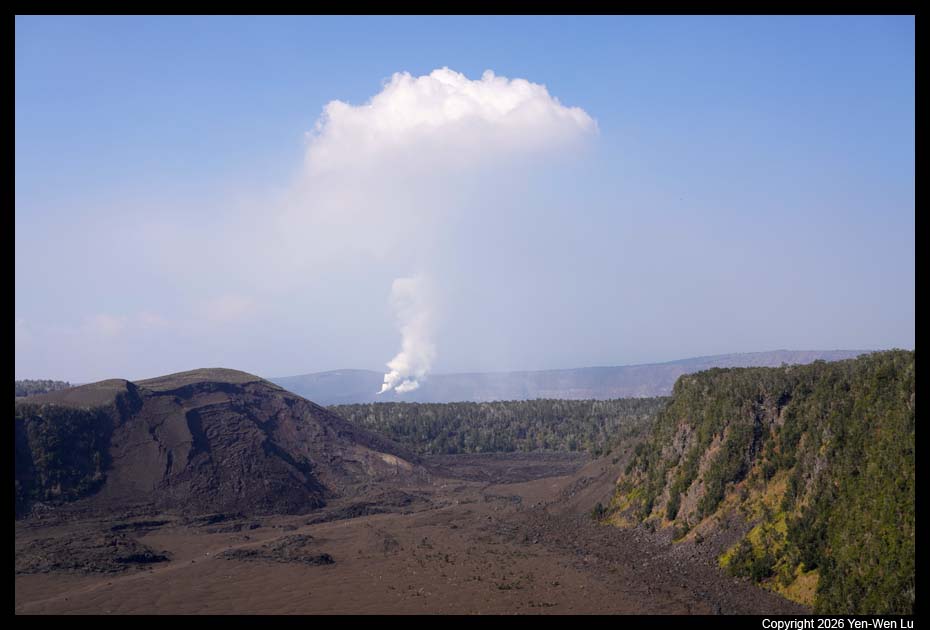
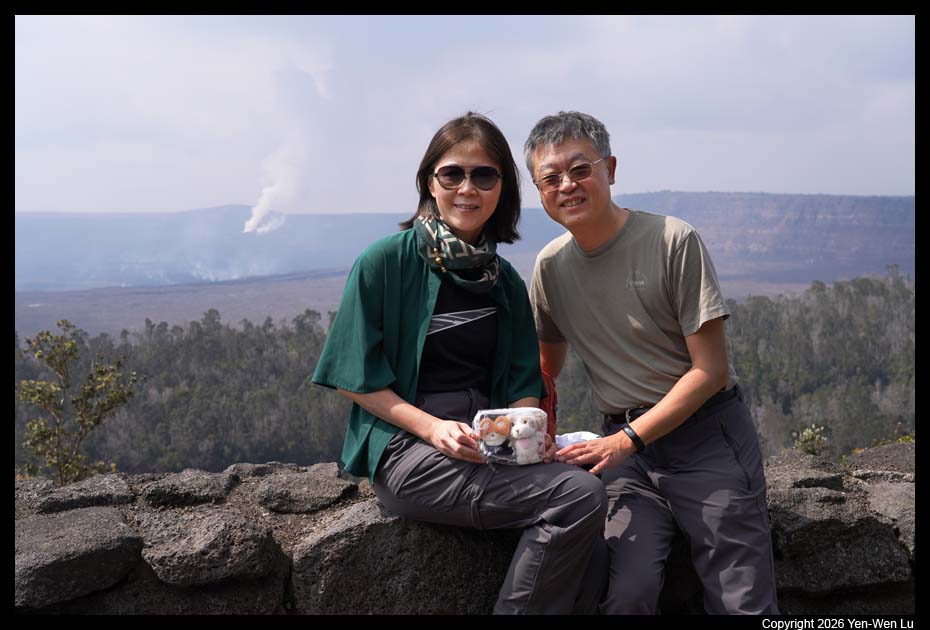
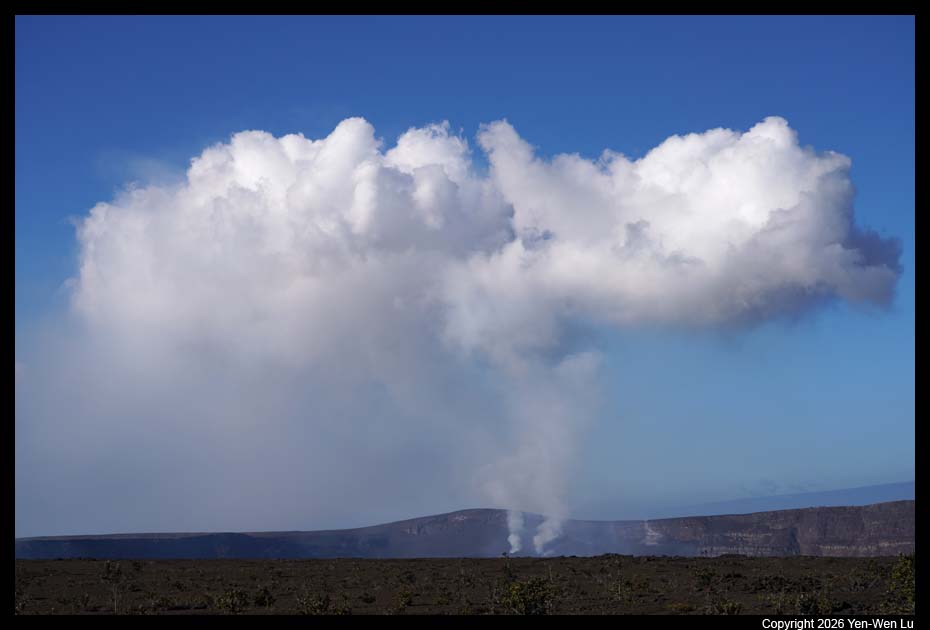
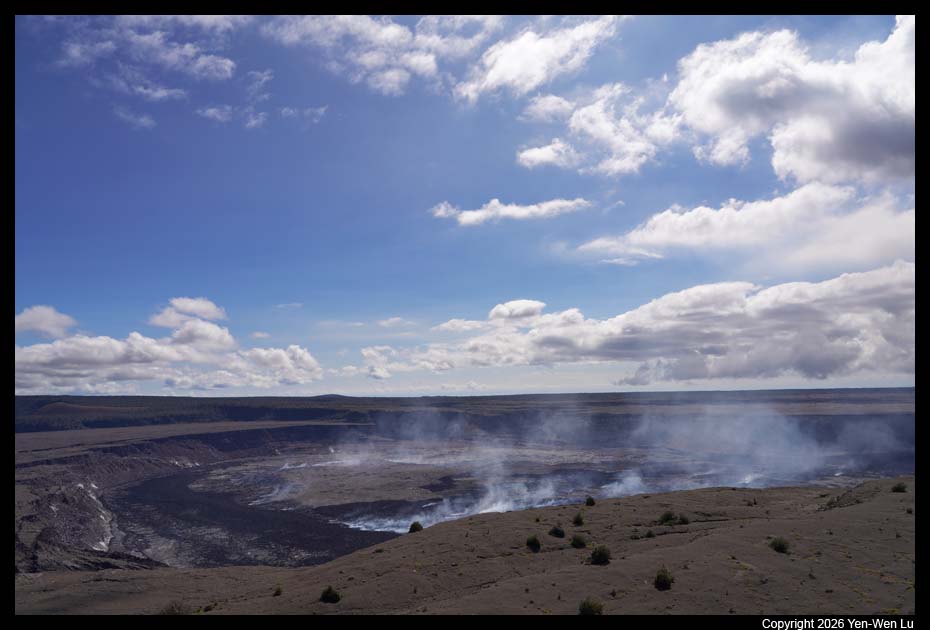
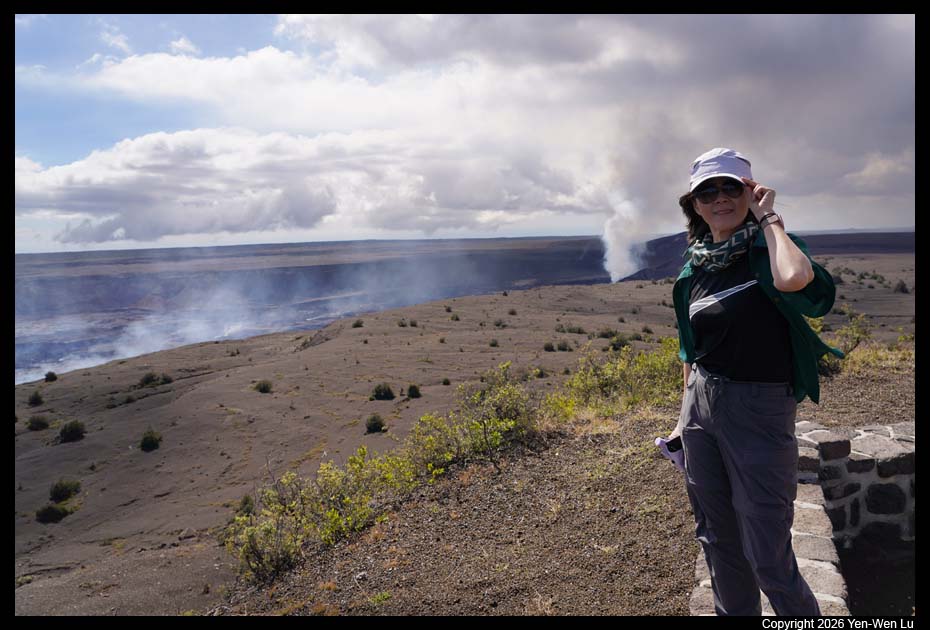
to take the Old Crater Rim Drive Trail to a viewpoint to see the close-up
view of the eruptive vents (although now there was only smoke around). The
park closed portions of Crater Rim Drive for public safety after
Halemaʻumaʻu began to erupt in March 2008. During the summit collapses of
2018, the road was damaged further. This portion of Old Crater Rim Drive is
now open to foot and bicycle traffic to a point just beyond Keanakākoʻi.
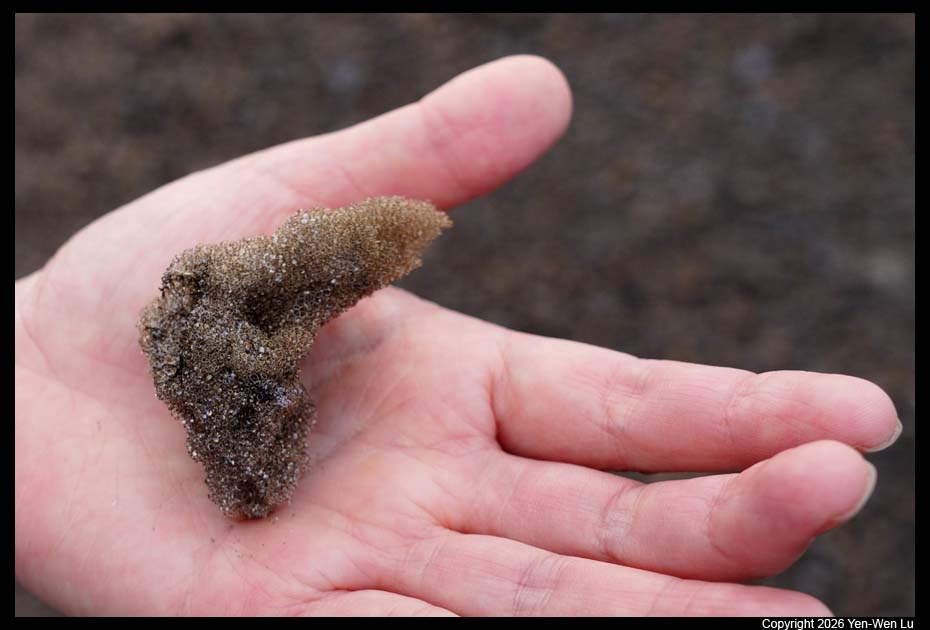
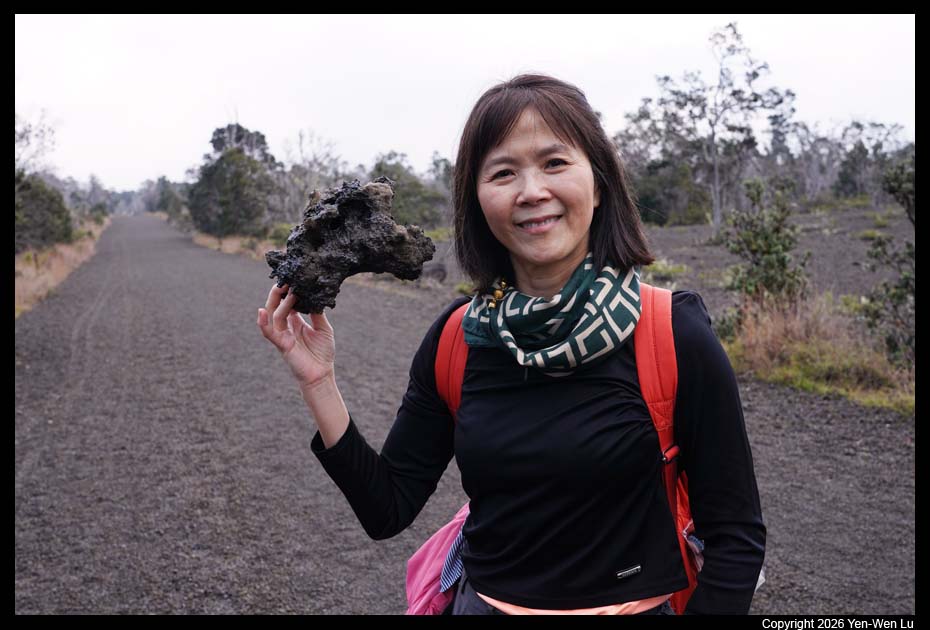
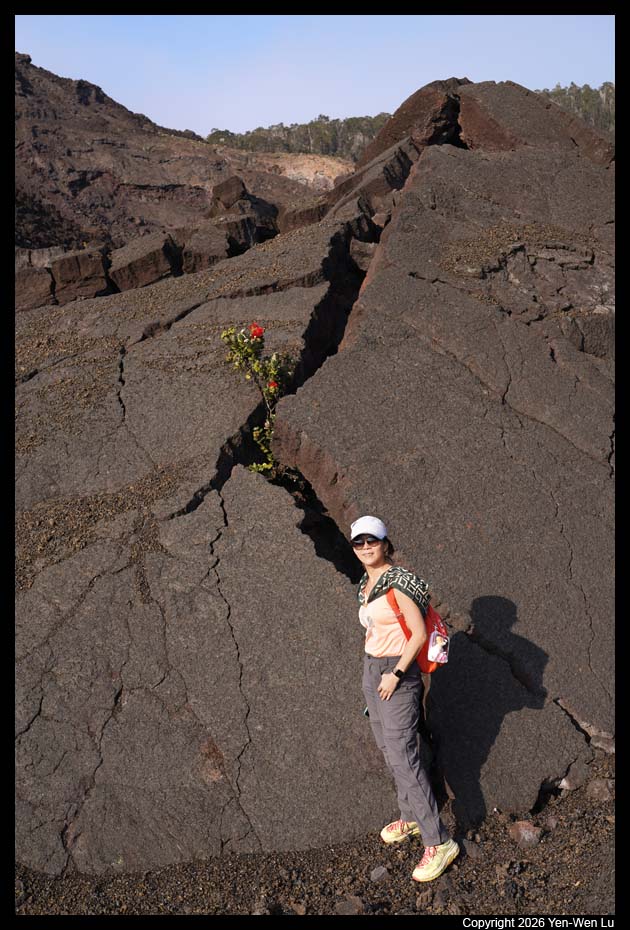
Since there were very active volcano eruptions in the past year, there are
tephra (airborne rock
fragments, volcanic glass, and ash ejected during explosive eruptions)
everywhere.
Day 2 (1/30) ...
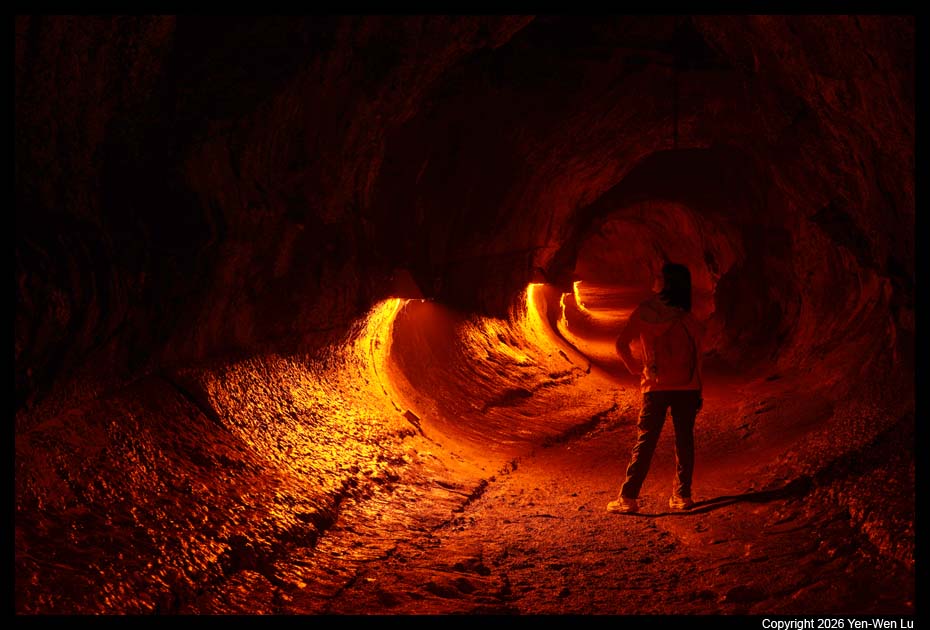
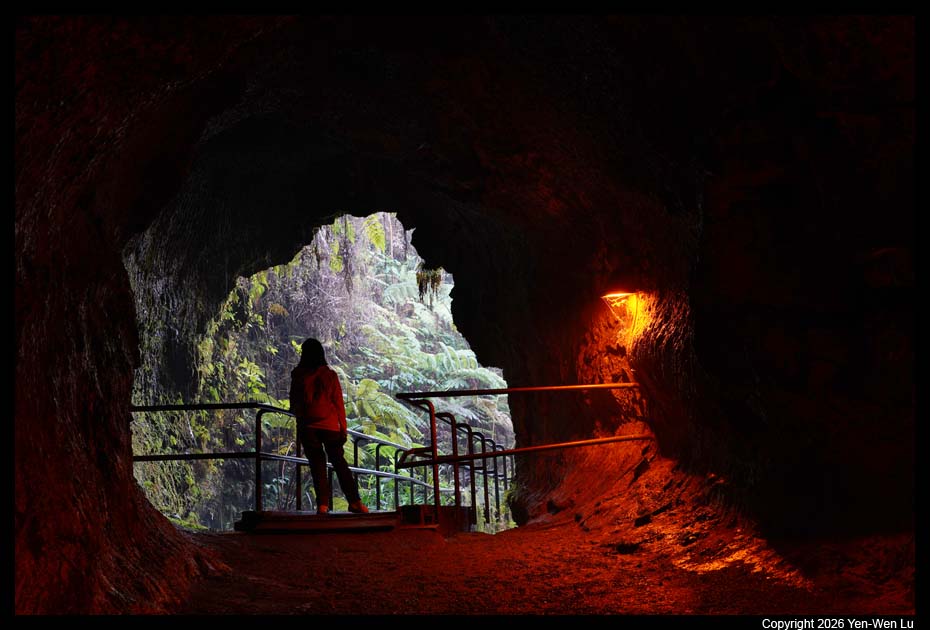
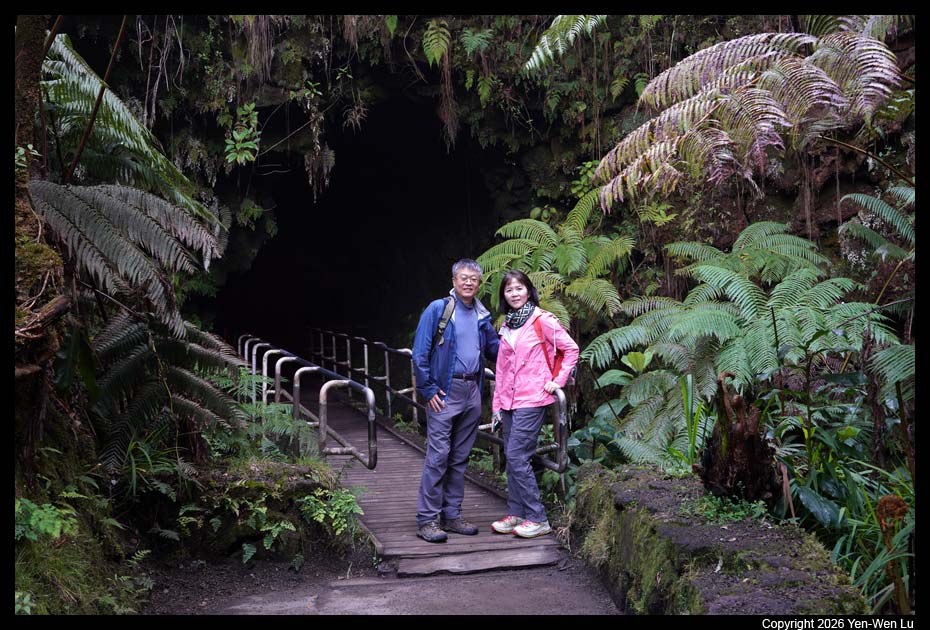
- Nāhuku (Thurston Lava Tube)
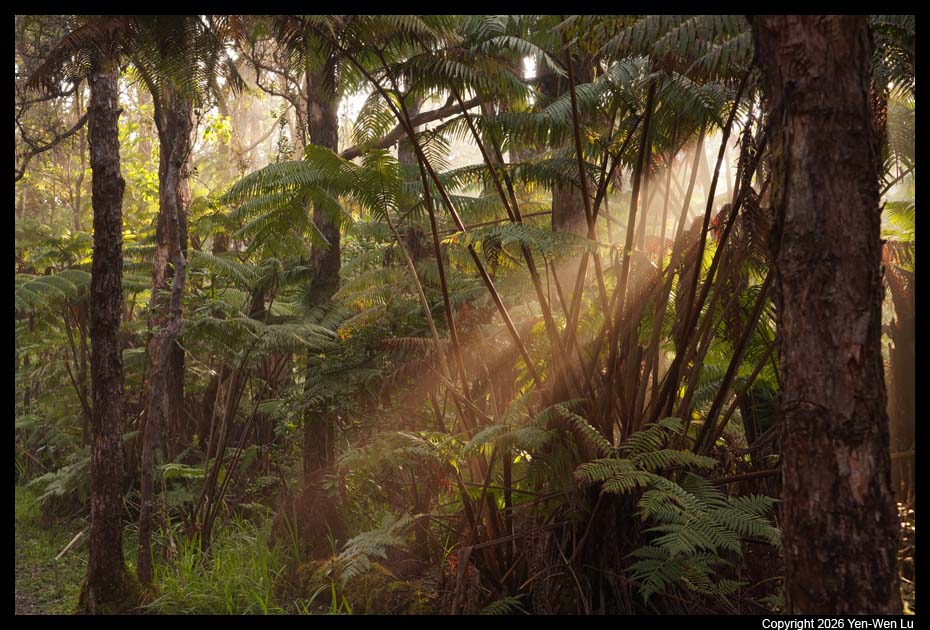
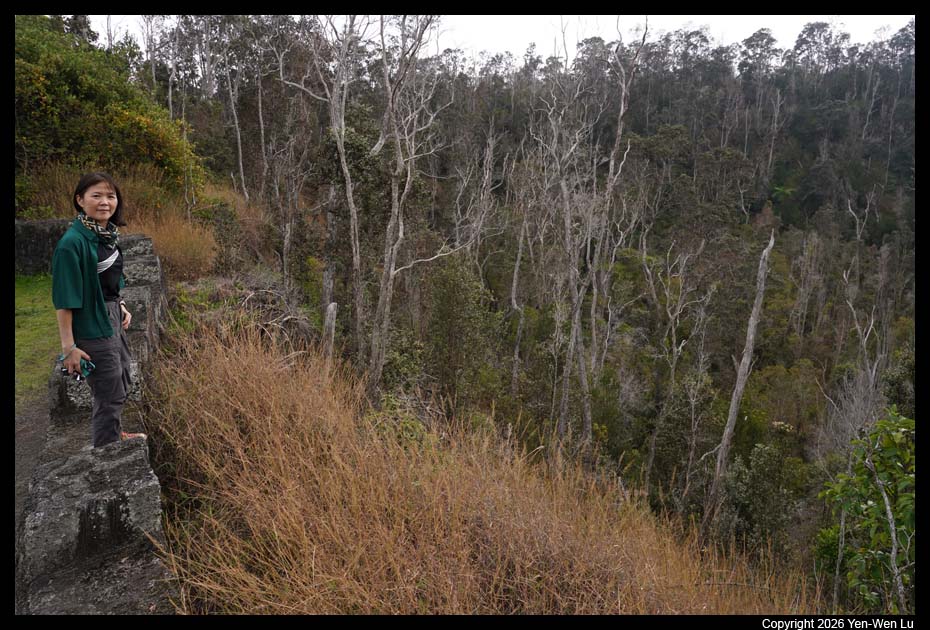
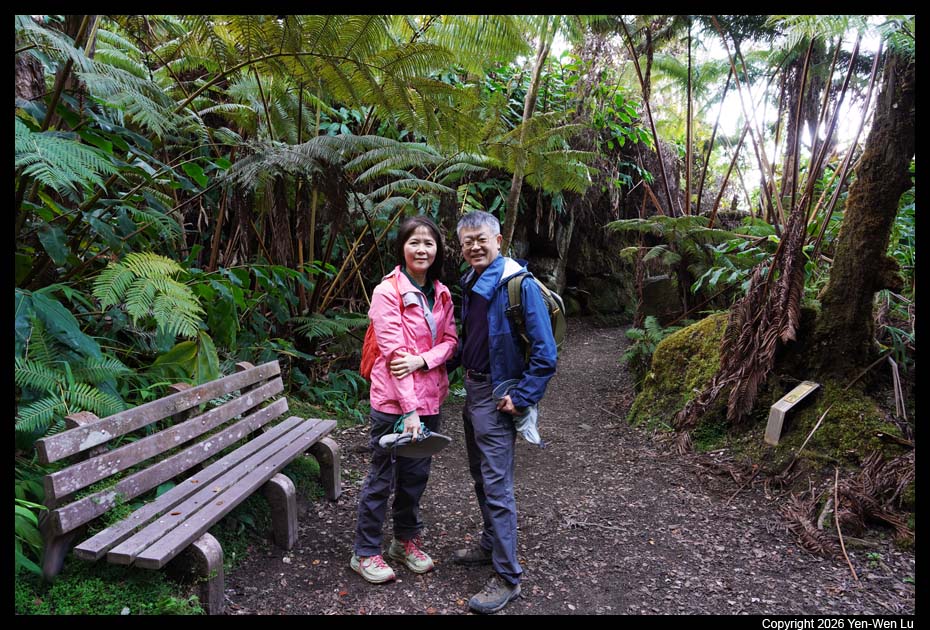
We walked through a verdant rainforest
and listen for the calls of native birds before entering a 500-year old lava
tube where a river of 2000° Fahrenheit (1093° Celsius) lava once flowed. Its
Hawaiian name, Nāhuku, means "the protuberances," which possibly refers to
the lava drippings that once hung from the ceiling. Unfortunately, those
disappeared due to souvenir collectors after the tube was discovered in
1913.
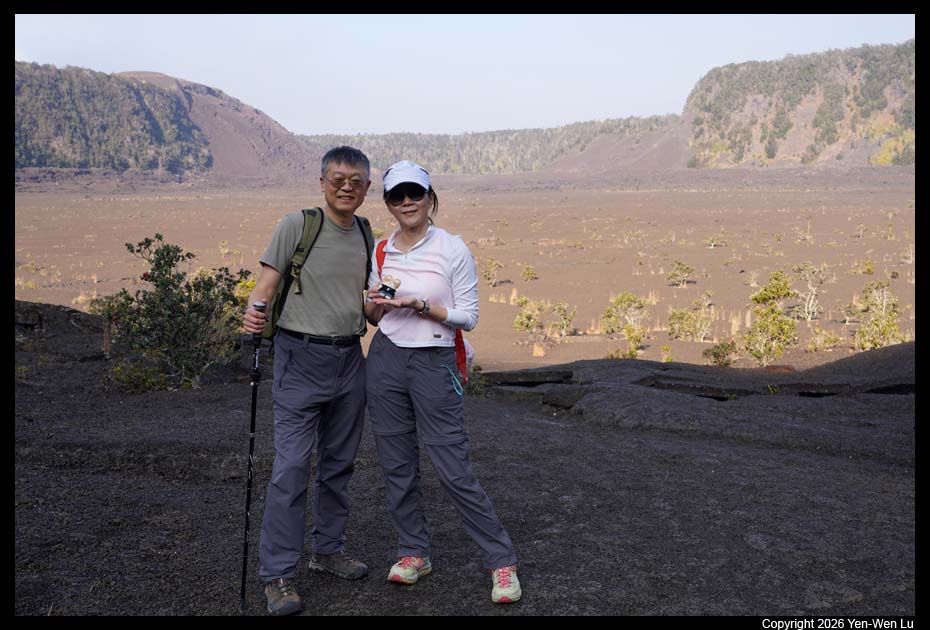
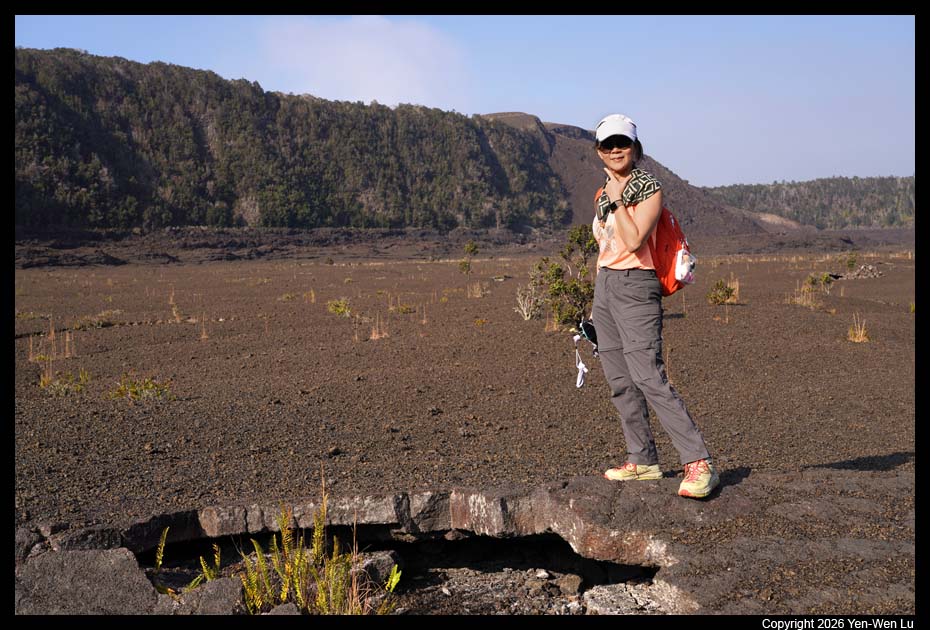
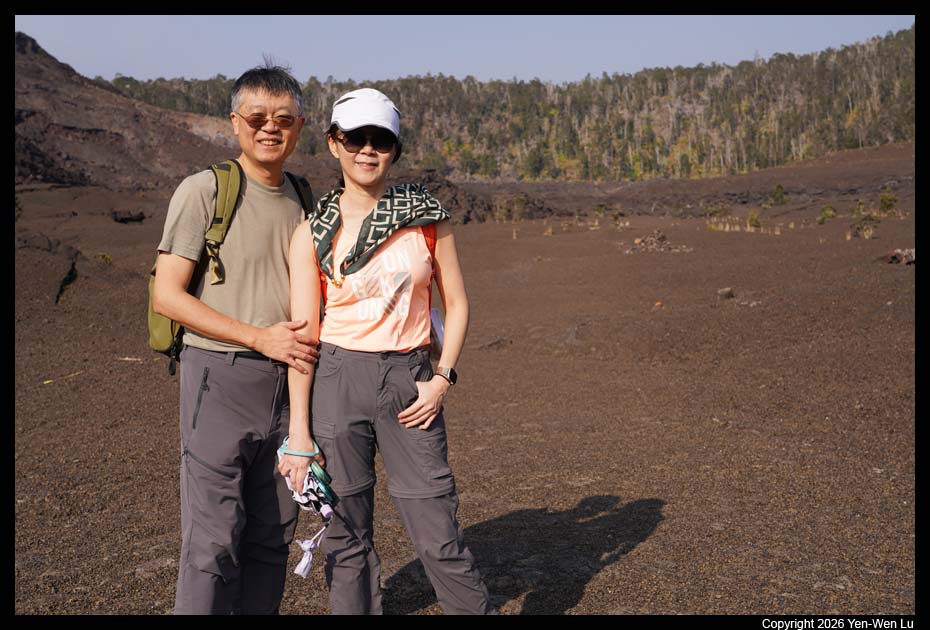
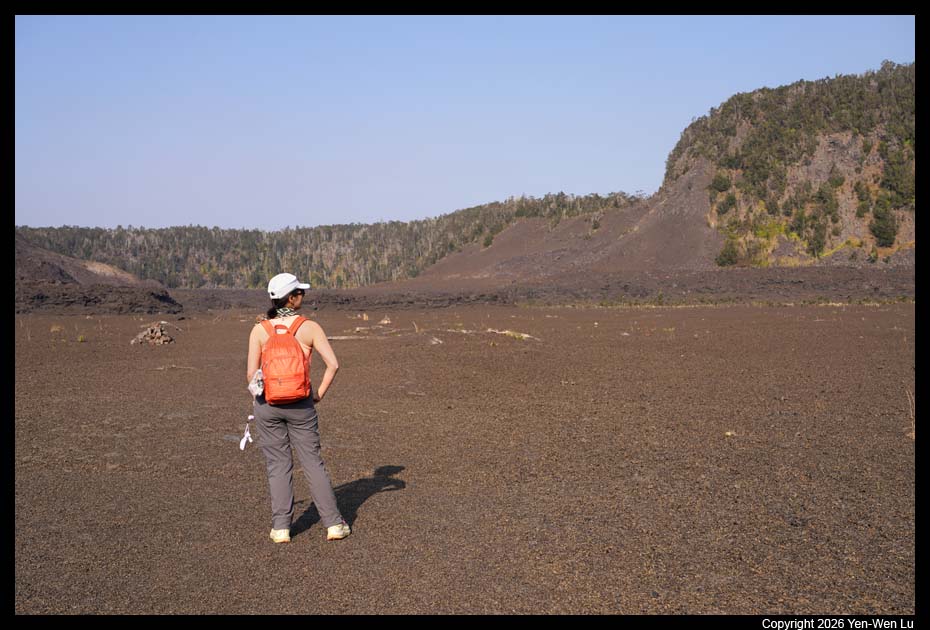
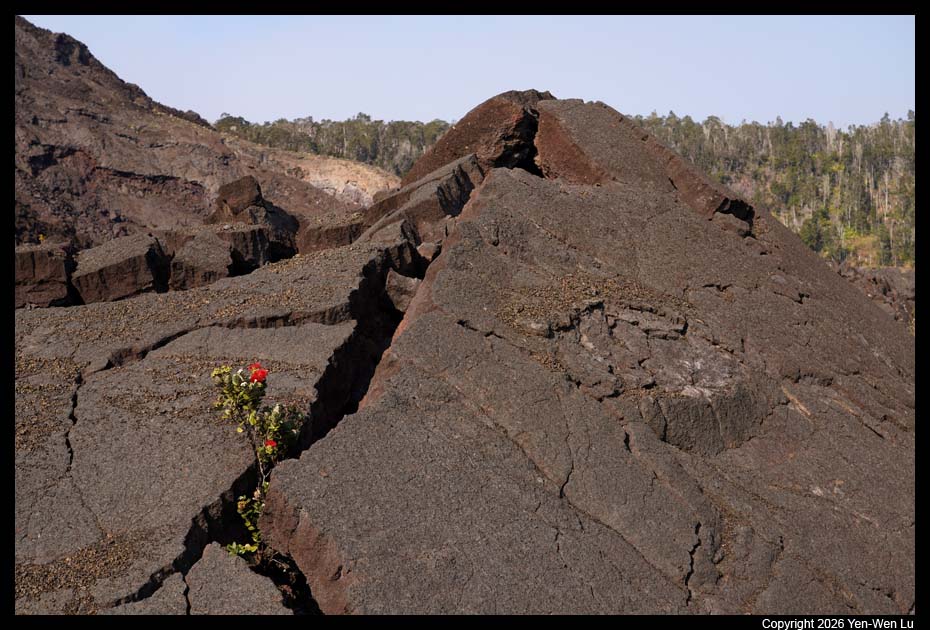
- Kilauea Iki Trail
Across the road from Nāhuku is the trailhead for
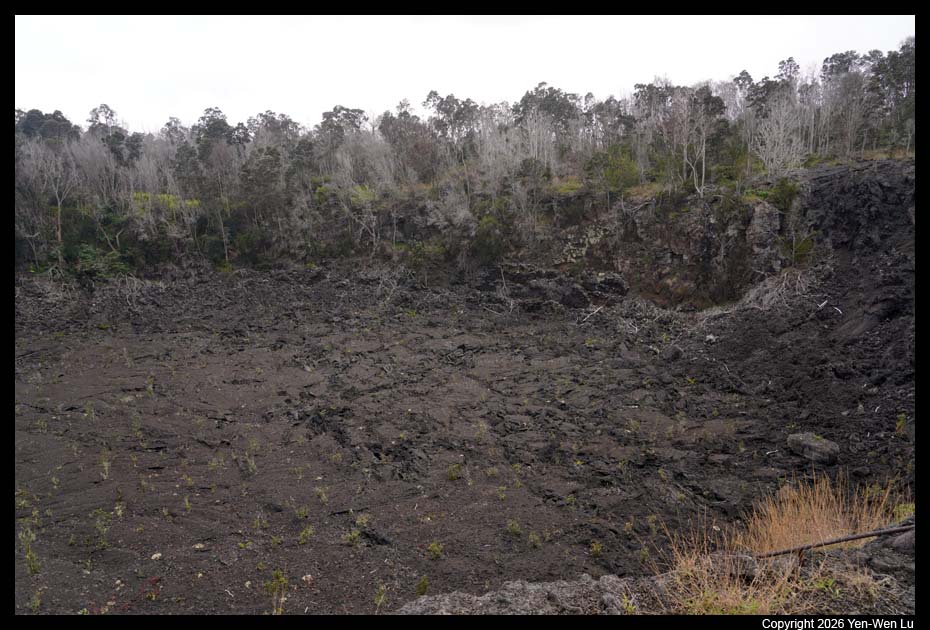
the popular Kilauea Iki Trail. The trail descends 400 ft through a
lush rainforest to the solidified lava lake on the floor of Kīlauea Iki
crater. During the eruption of 1959, it erupted to a height of 1900 feet
from a vent located below Puʻupua‘i cinder cone. We have been on this
3.5-mile loop trail 20
years ago with Linus and Iris. It was definitely a fun memory
(although Woanyu did not remember anything) to retrace a family hike.
We were back to the Volcano House before 11AM.
After a quick shower, we went to the restaurant to enjoy the lunch with a nice
view.
- Chain of Craters Road
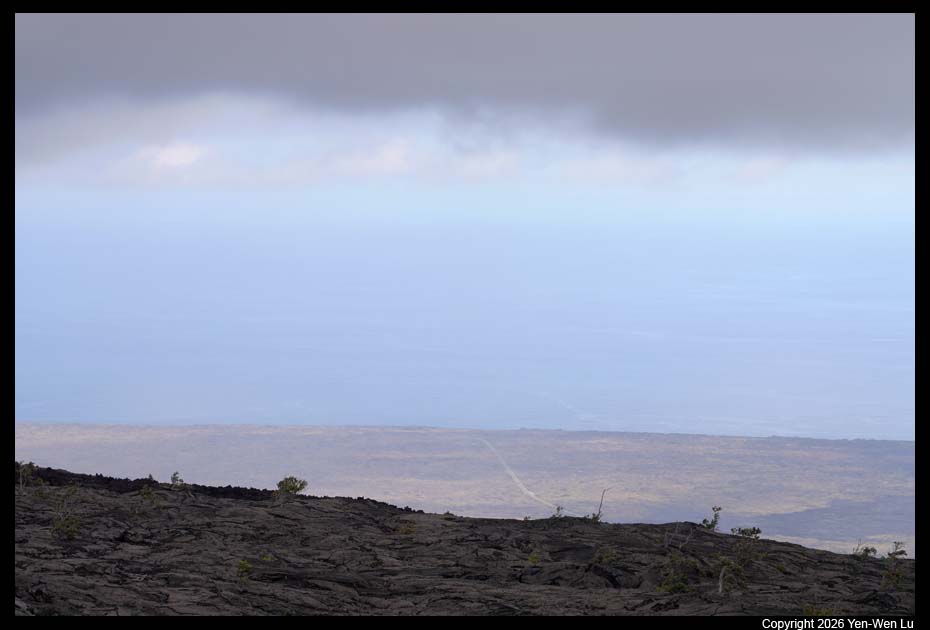
Chain of Craters Road is a 19-mile (31 km) long
winding paved road through the East Rift and coastal area of the Hawaii
Volcanoes National Park. The original road, built in 1928, connected
Crater Rim Drive to Makaopuhi Crater. The road was lengthened to reach the
tiny town of Kalapana in 1959. Lava flows from the Kīlauea volcano
eruption closed the road in 1969. In 1979, the road was reopened, but it was
cut again in 1986 by a lava flow from another eruption of Kīlauea.
In June 1989, Waha‘ula Visitor Center and associated buildings were burnt
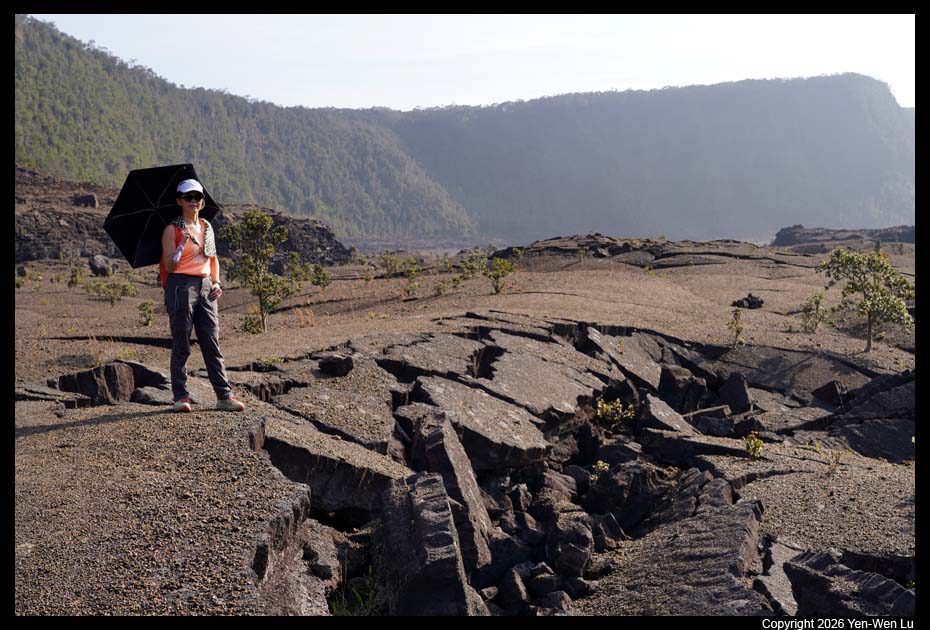
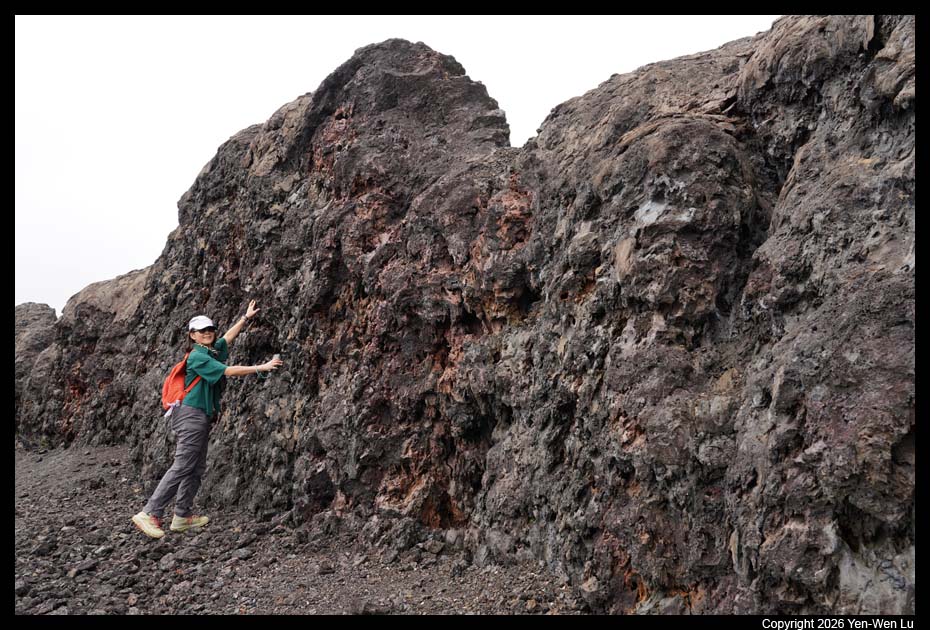
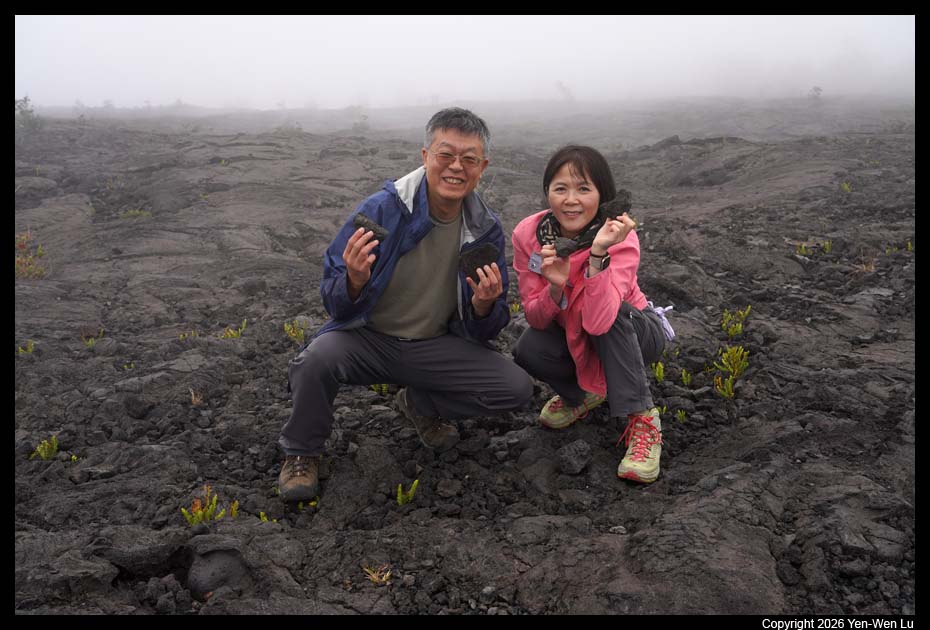
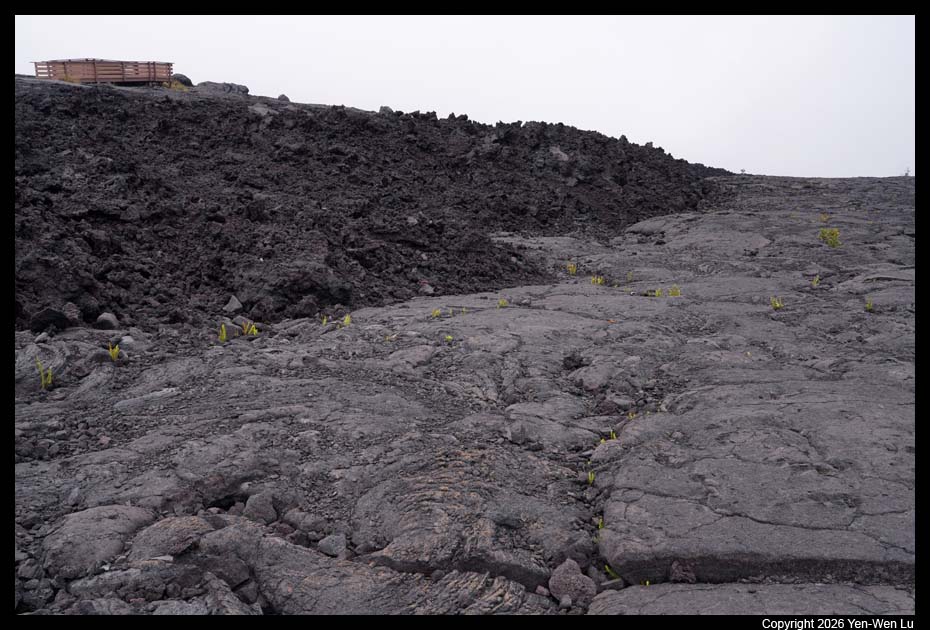
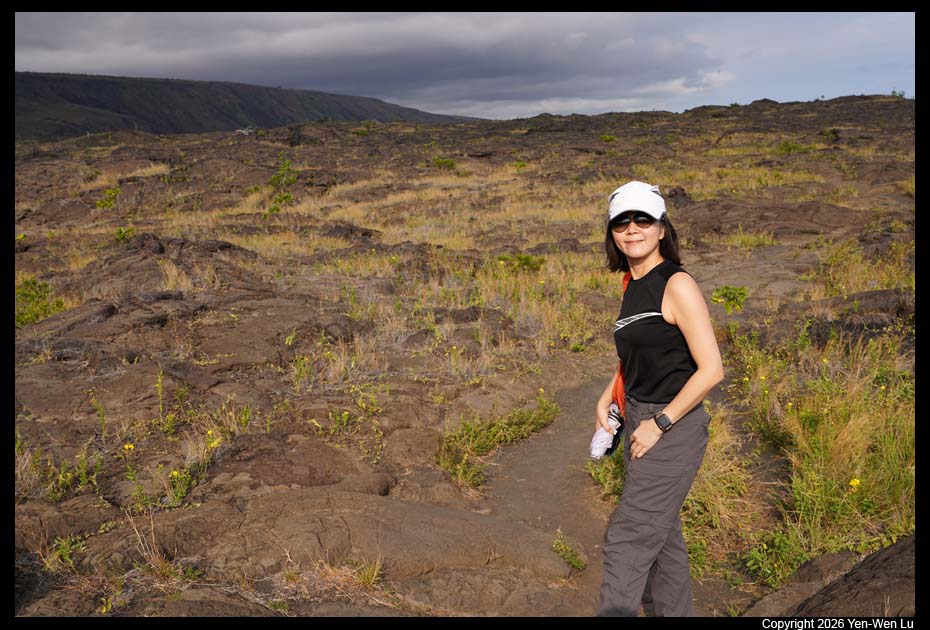
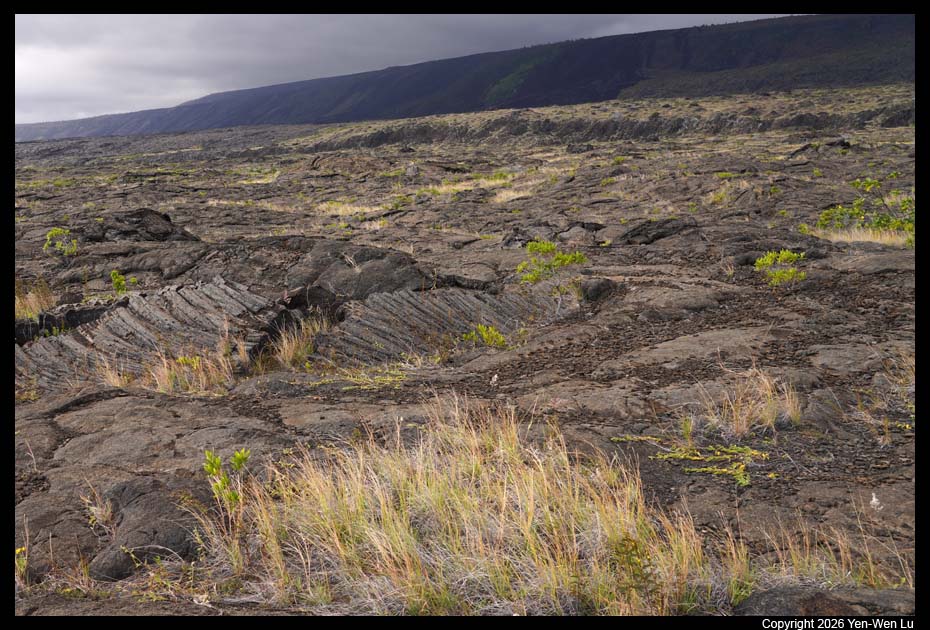
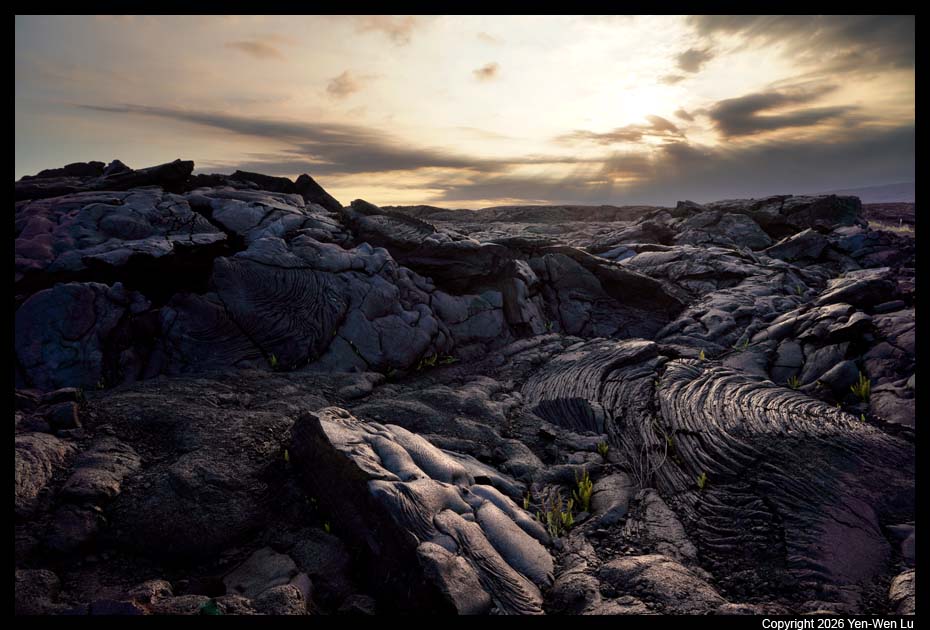
and covered by lava. We stopped by a few vista points and walked into
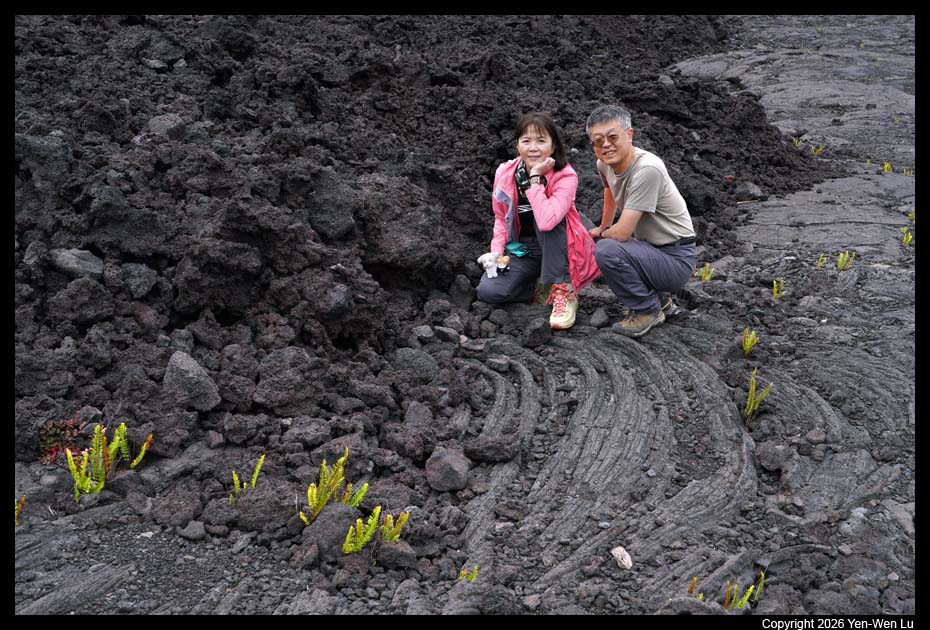
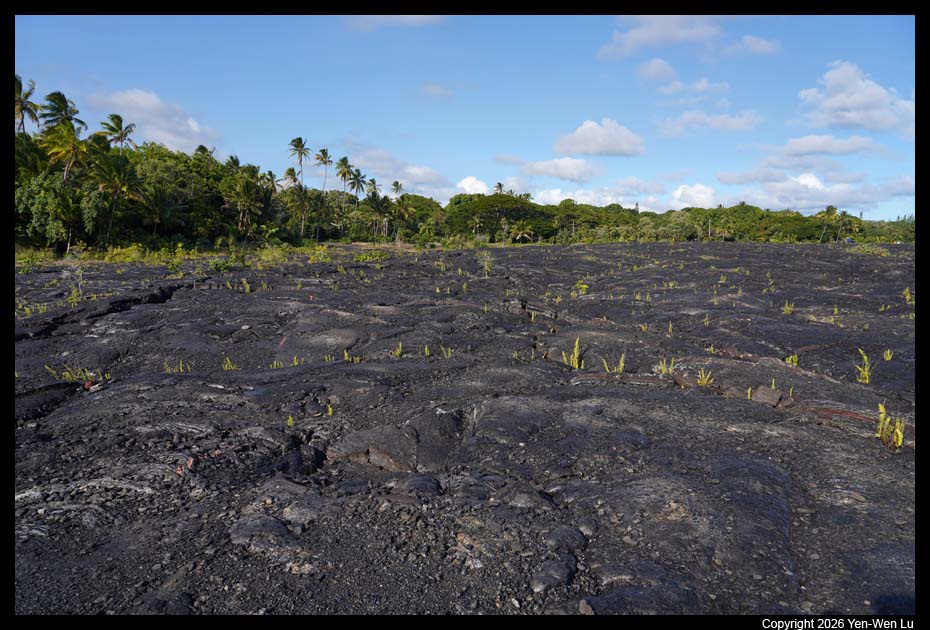
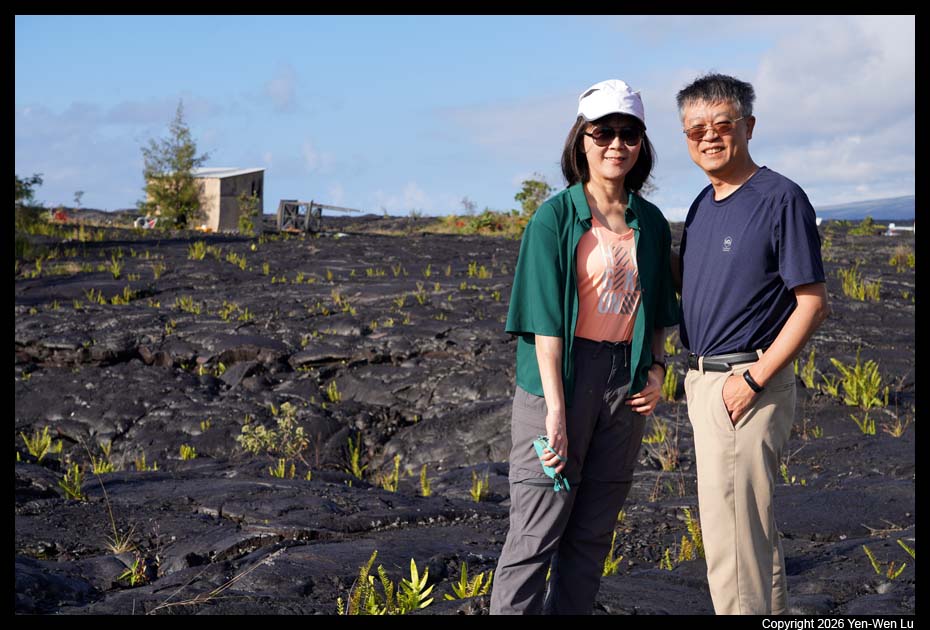
the lava fields which cover the land from the hills to the ocean. There are
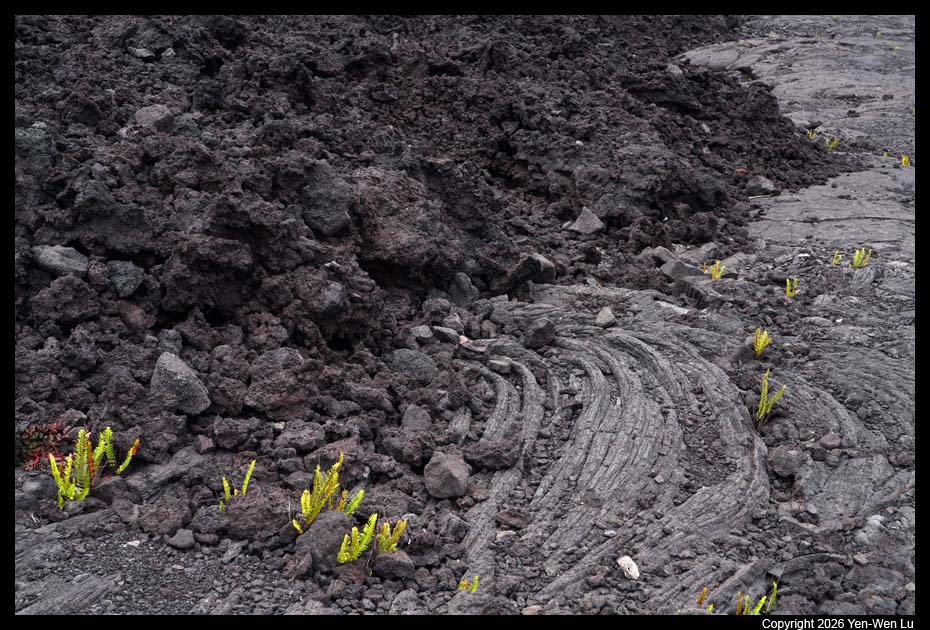
a few places where two types of lava,
pahoehoe (with smooth surface)
and a'a (more jagged), coexisting and just next to each other.
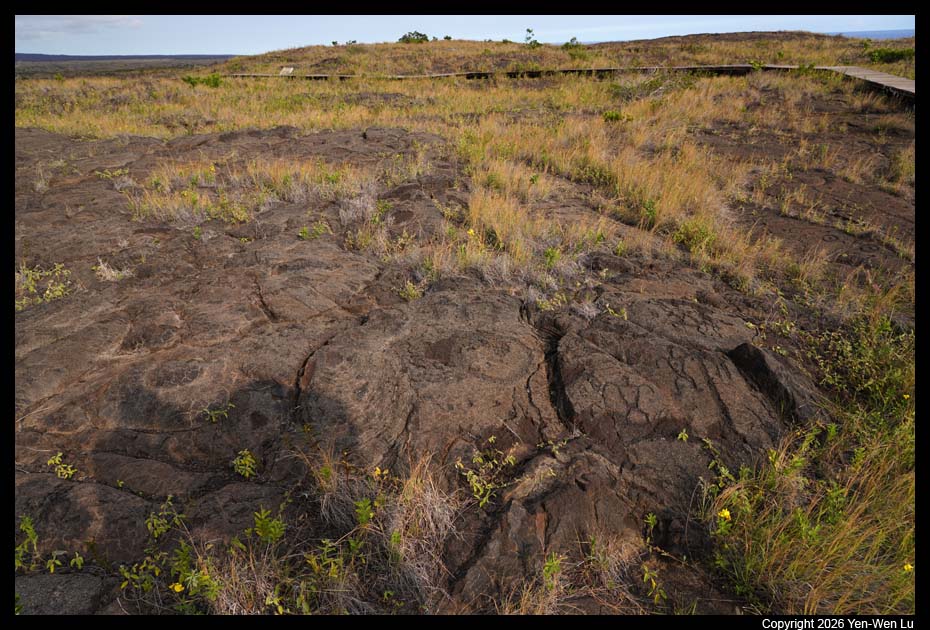
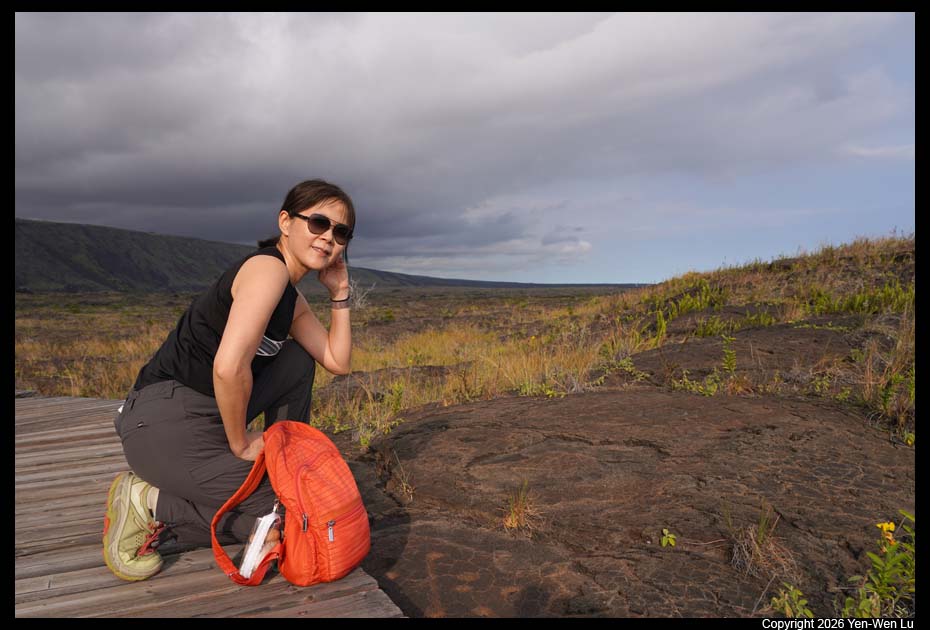
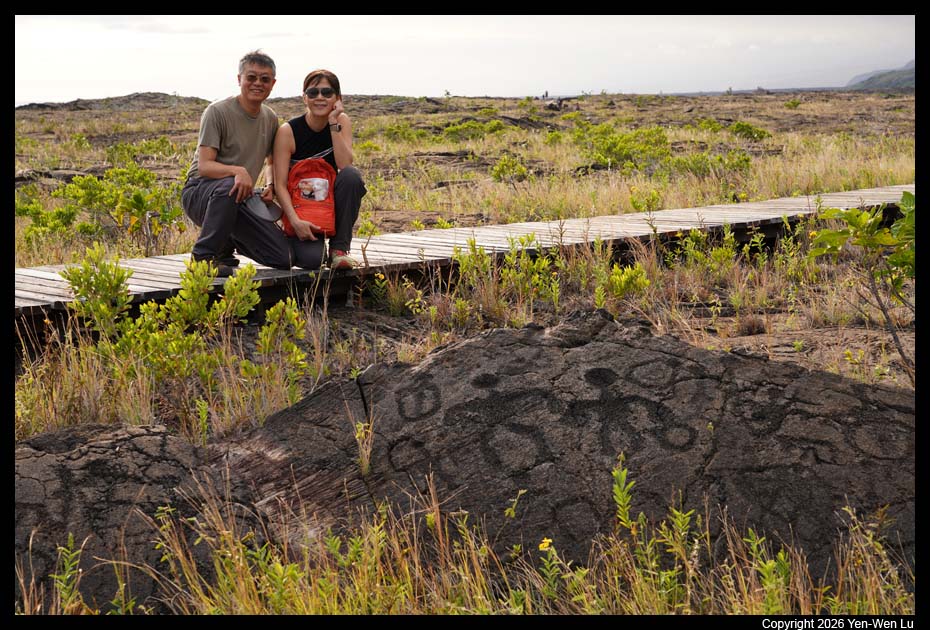
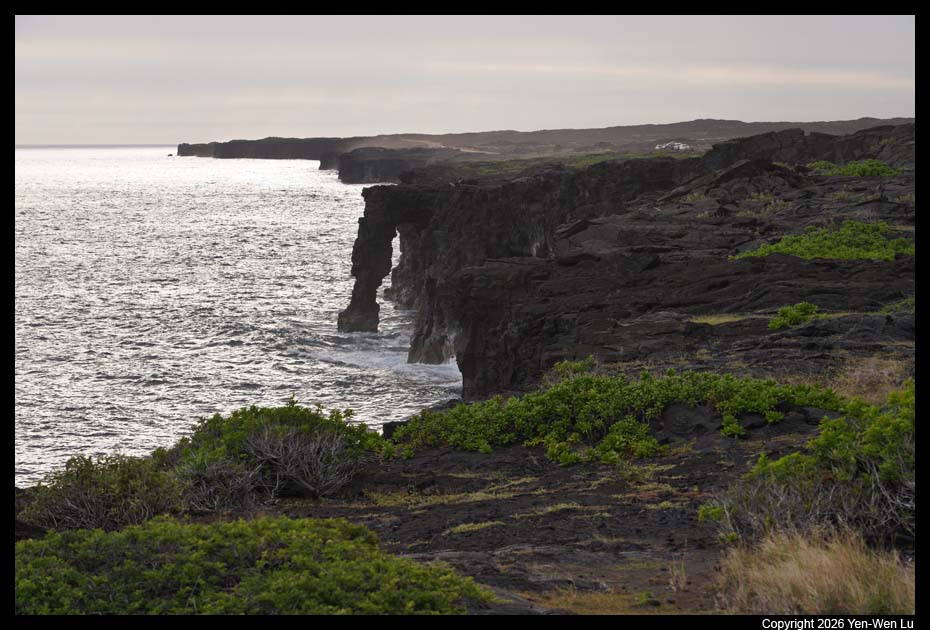
- Pu'uloa Petroglyphs & Holei Sea Arch
The coastal trail traverses a
500-550 year old lava field to one of the most extensive petroglyph fields
in Hawaii. Pu'uloa is a site that has approximately 23,000 petroglyphs, many
viewable at a boardwalk constructed for this purpose.
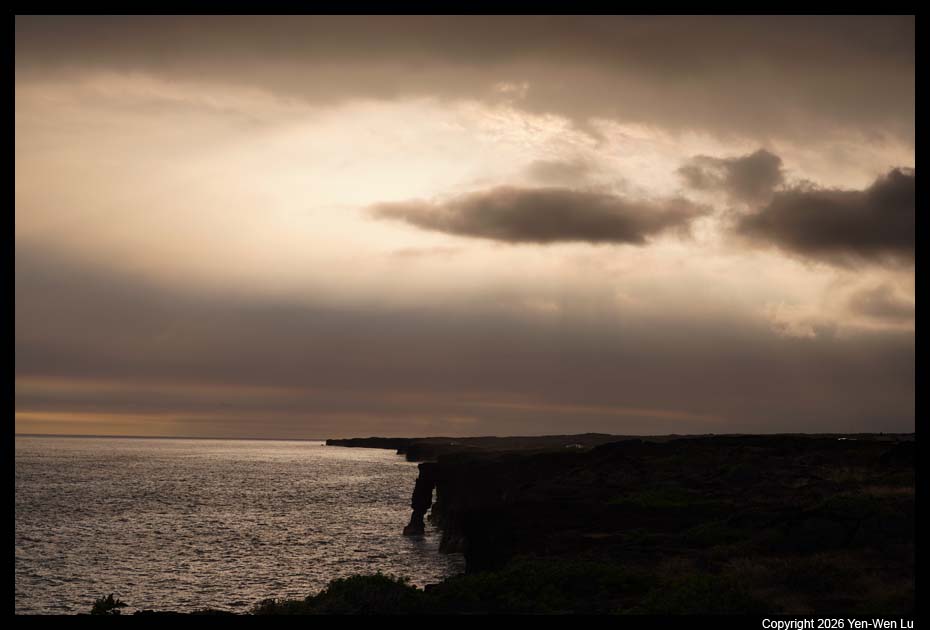
The Chain of
Craters Road currently ends around the Holei Sea Arch. A short walk
after the end of road leads to a viewpoint to see the sea arch.
Day 3 (1/31) ...
- Volcano House
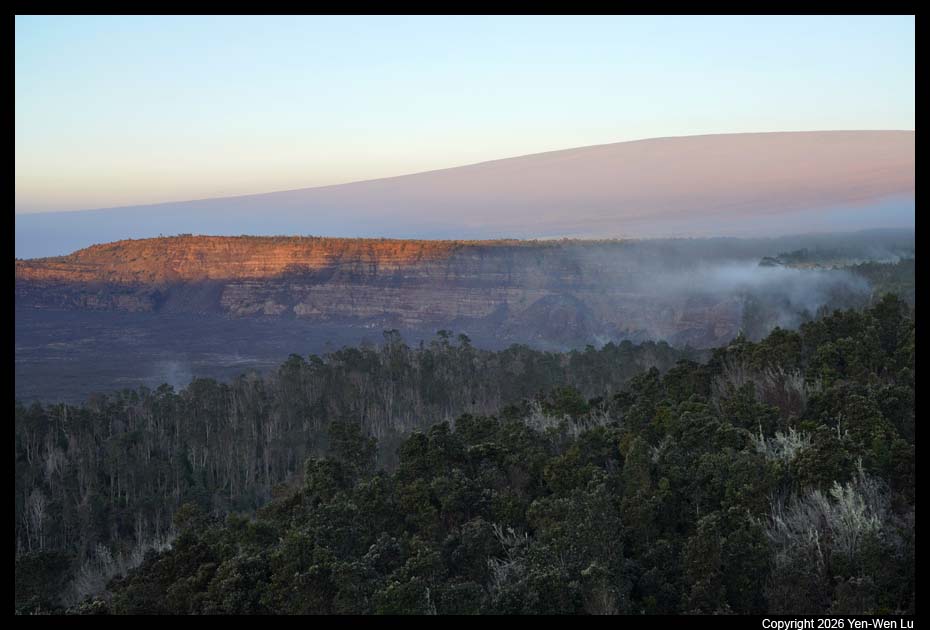
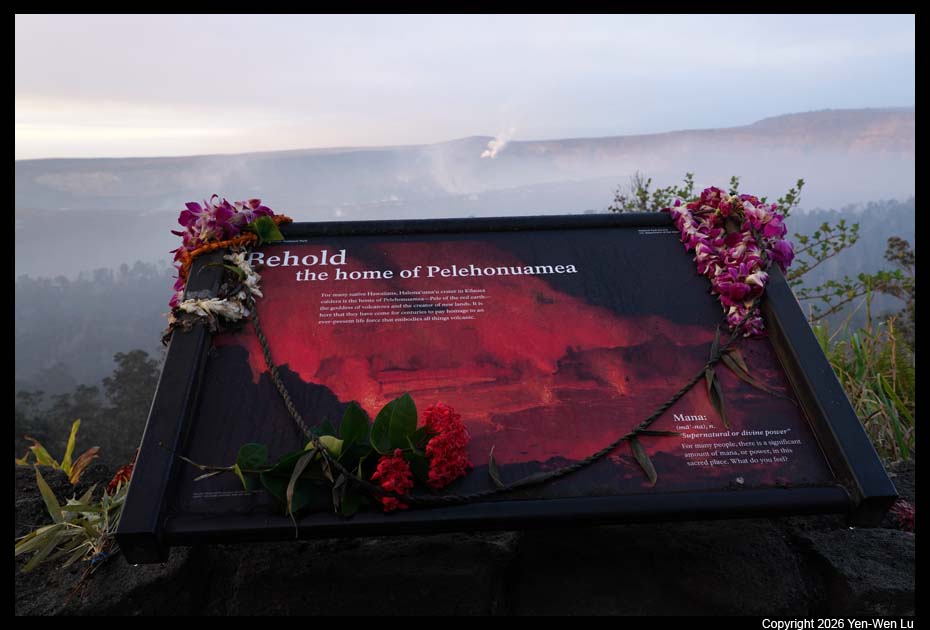
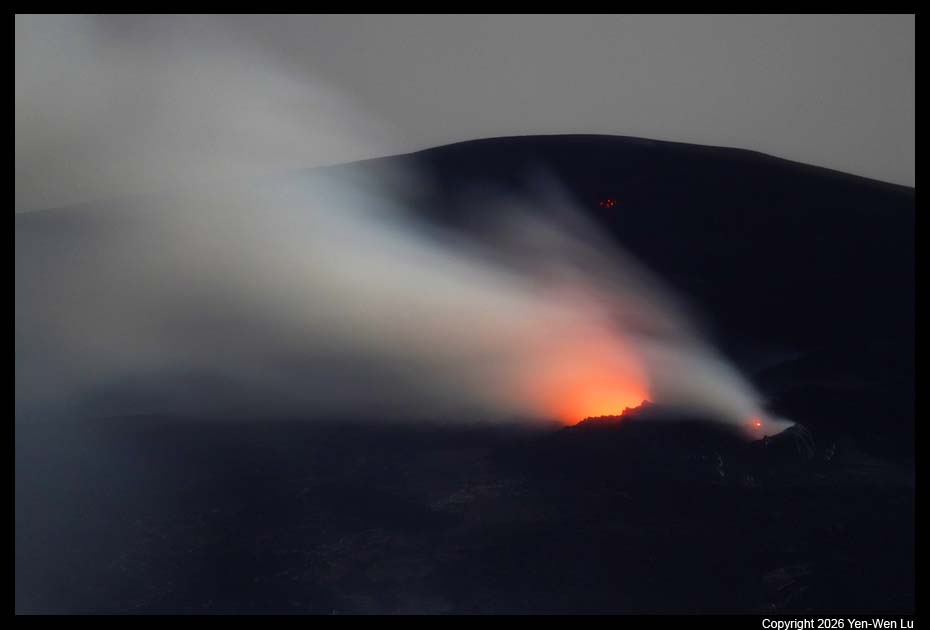
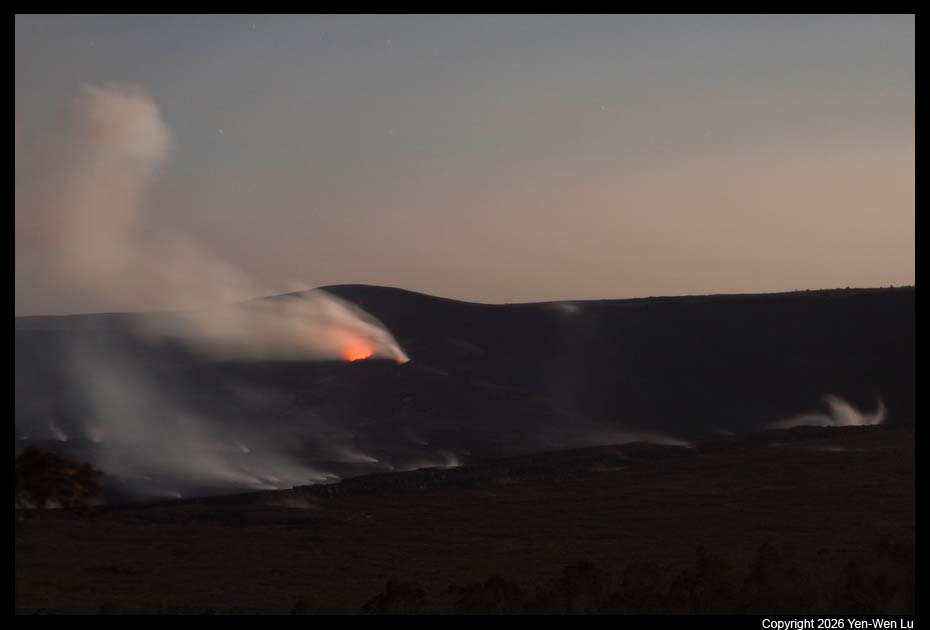
I woke up at ~3:30AM and saw some red glow from the
vents across the crater. Although we missed the real eruption (by 5
days), I was still excited to be able to see the glow at night.
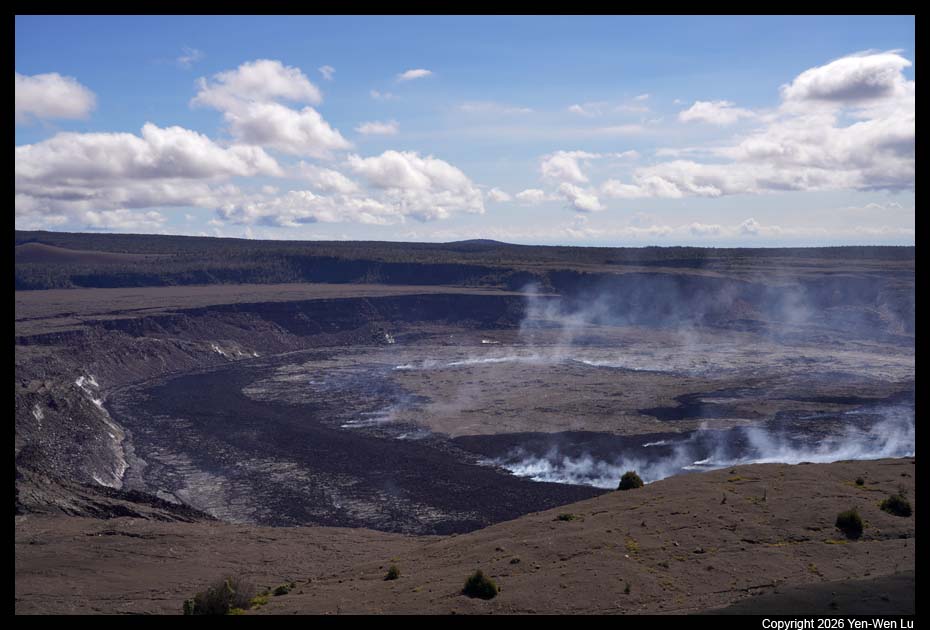
- Halema'uma'u Trail
Halema'uma'u Trail starts from Crater Rim Trail
near the Volcano House, and descends 425 feet (130m) through a rain forest
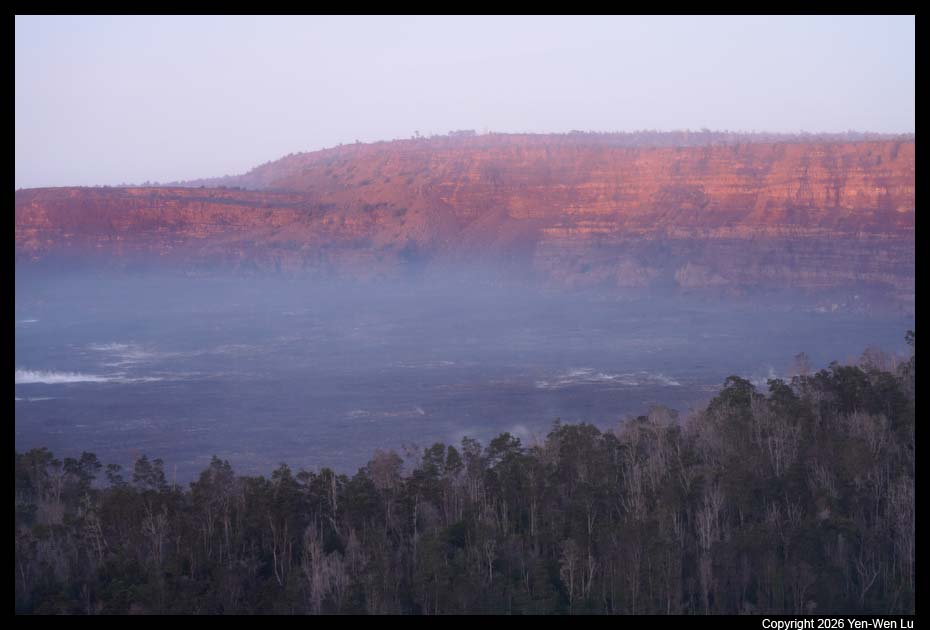
to a panoramic view on the floor of Kīlauea caldera (0.8 miles one-way).
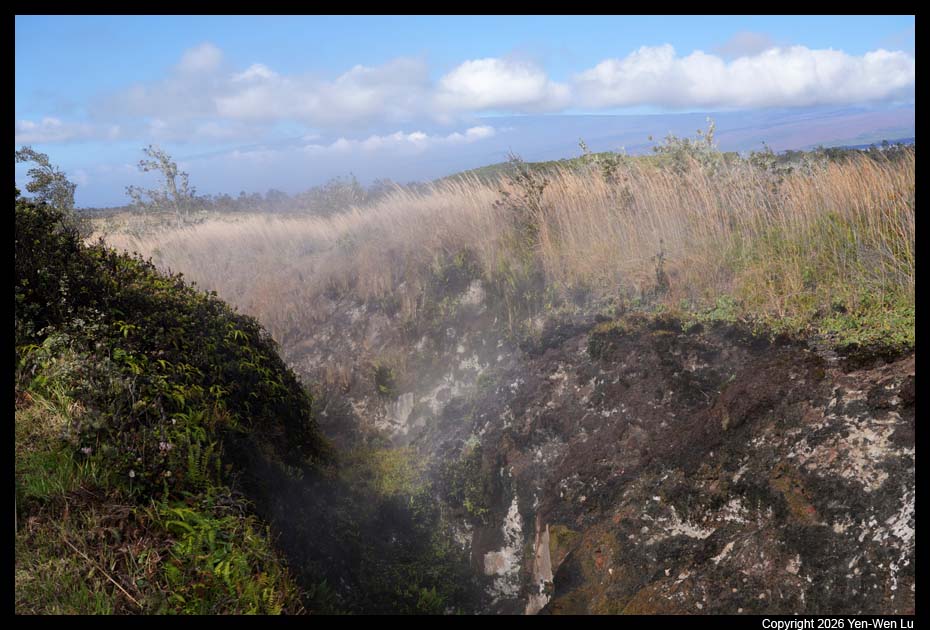
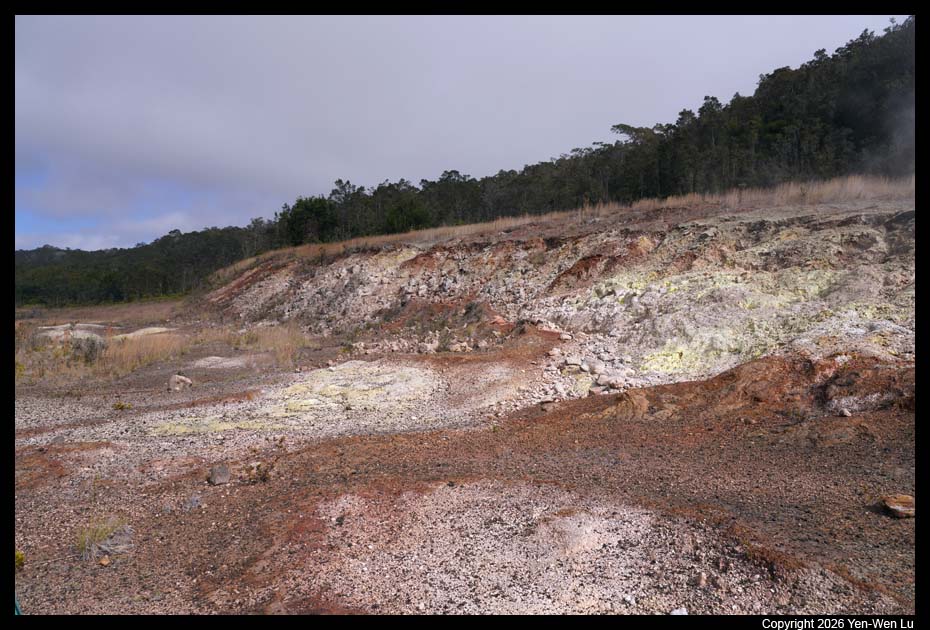
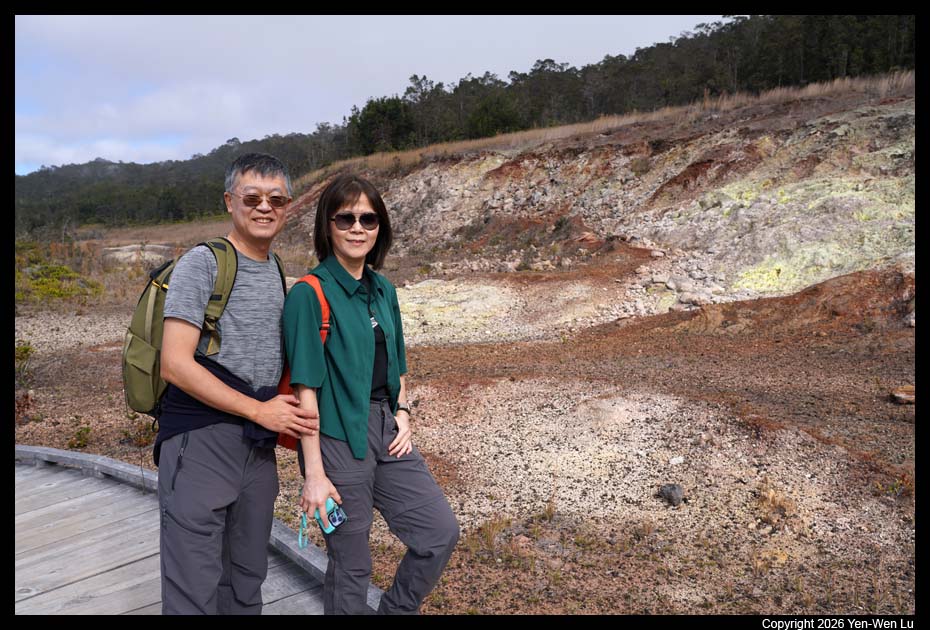
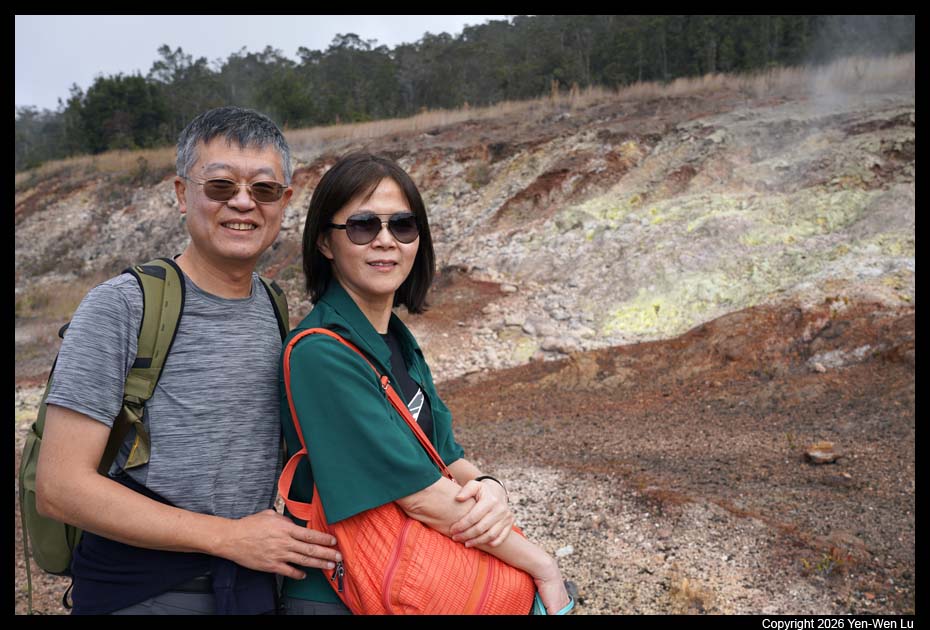
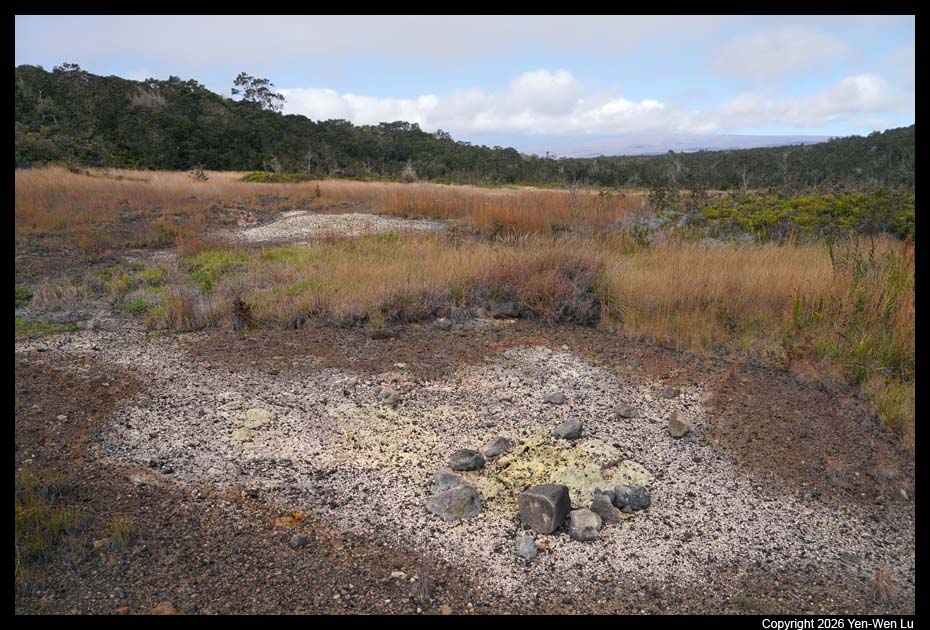
- Kukamahuakea (Steam Vents) & Ha'akulamanu (Sulphur Banks)
When we
returned from Halema'uma'u Trail, we decided to continue on Crater Rim Trail
to Kukamahuakea (Steam Vents) & Ha'akulamanu (Sulphur Banks). At
Ha'akulamanu (Sulphur Banks), volcanic gases seep out of the ground along
with groundwater steam. These gases are rich in carbon dioxide, sulfur
dioxide and hydrogen sulfide -- the gas that smells like rotten eggs.
The mixture of warm and cool air surrounded us along the trail and made us
difficult to decide whether we should put on our jackets or not.
- Kilauea Overlook & Uekahuna
We were back to the hotel room to
pack for
check-out at ~ 10:30AM. Before leaving the Volcanoes National Park, we
drove on the Crater Rim Drive West to the last two vista points:
Kilauea Overlook and Uekahuna.
- Kaimu - Chain of Craters Road
We continued our journey to the
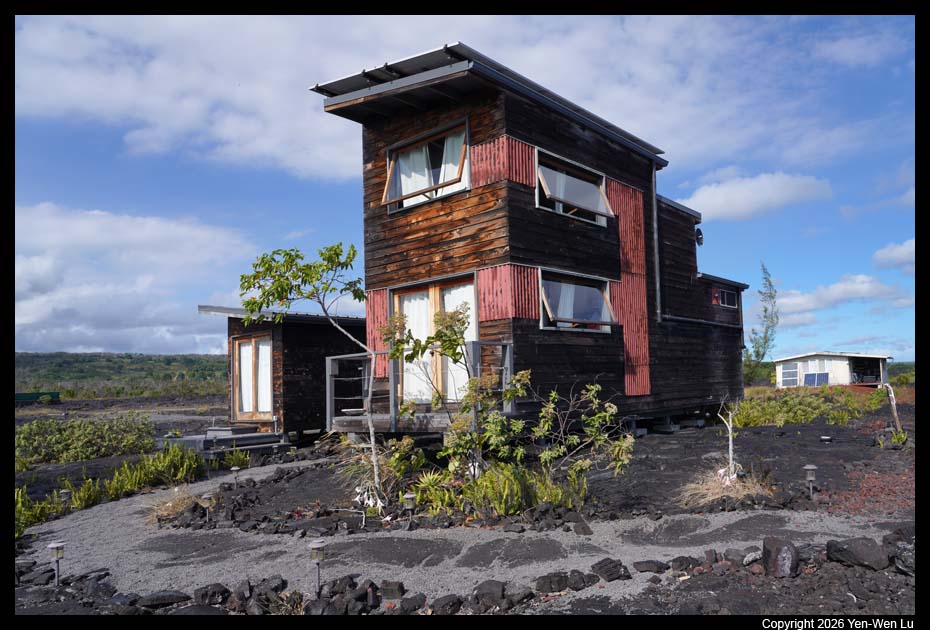
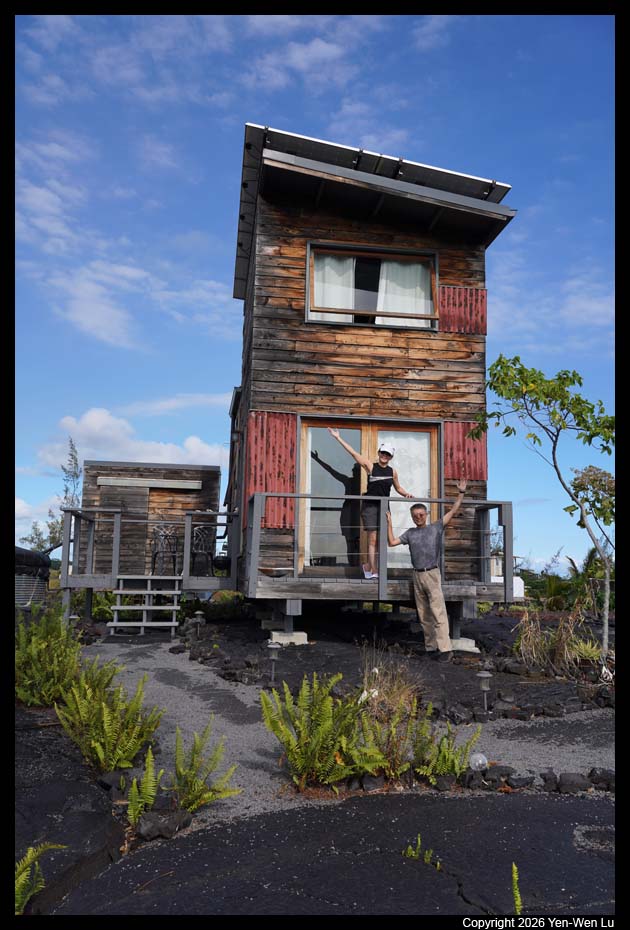
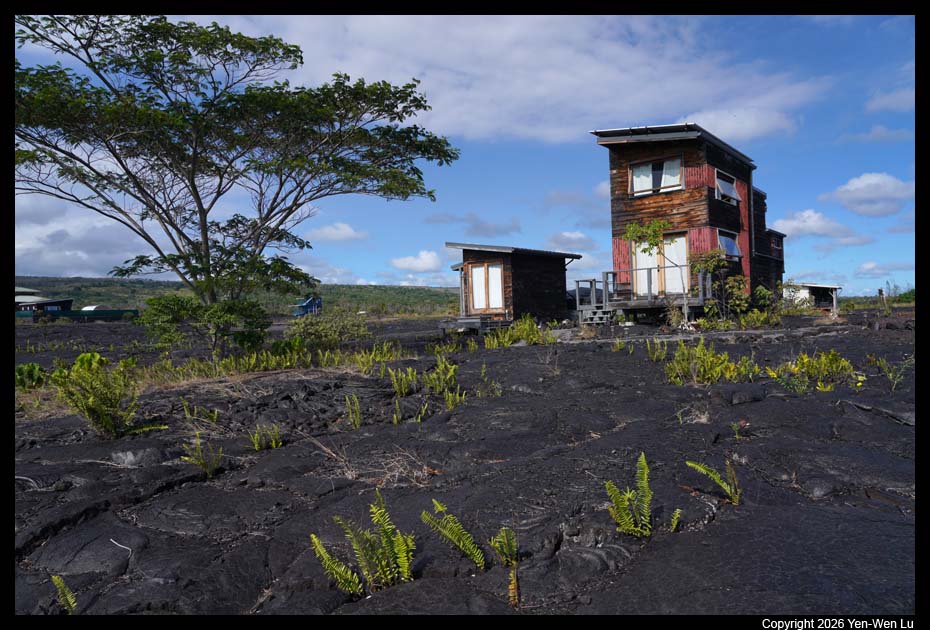
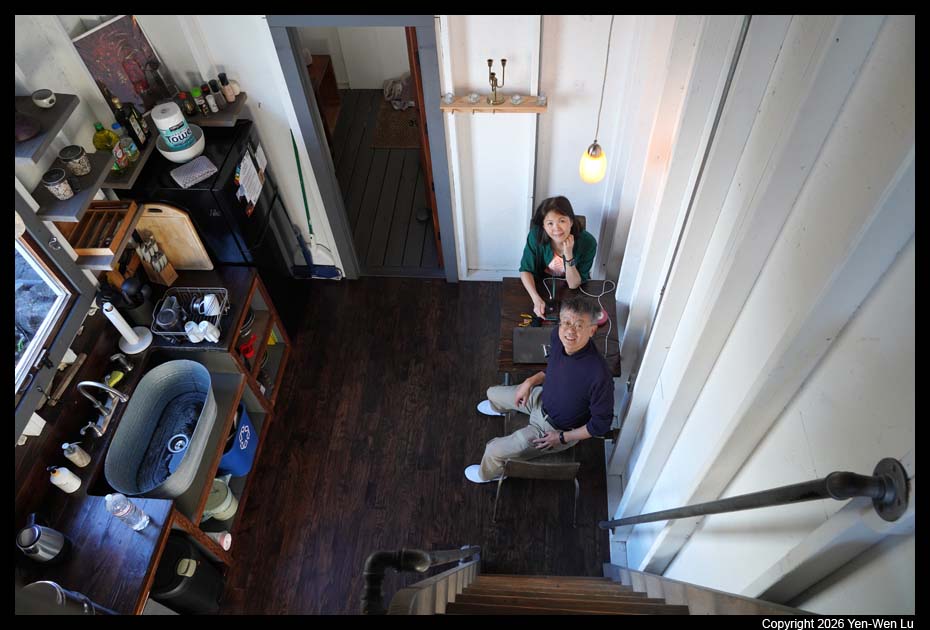
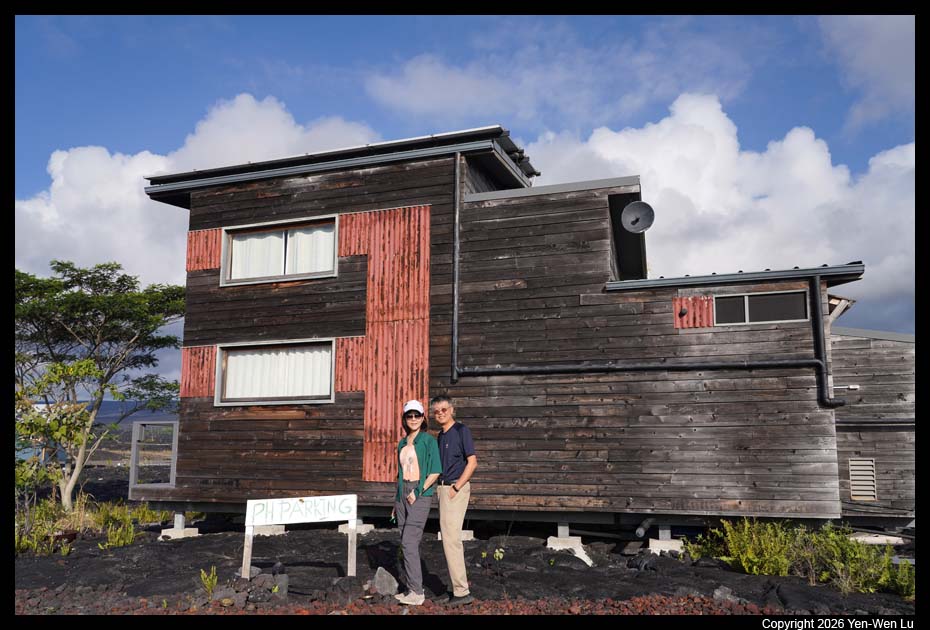
southeastern corner of the Big Island. I found a small cabin (the
Phoenix House) on Airbnb,
built on the 1990 Kalapana lava flow. This tiny house is part of a
regenerative, off-grid community compound.
- Kehena & Opihikao
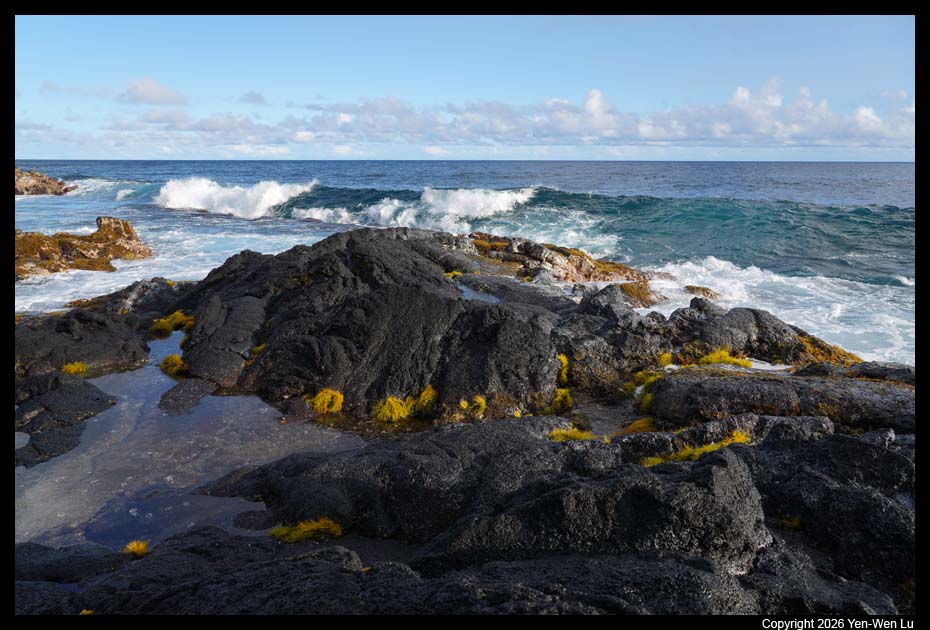
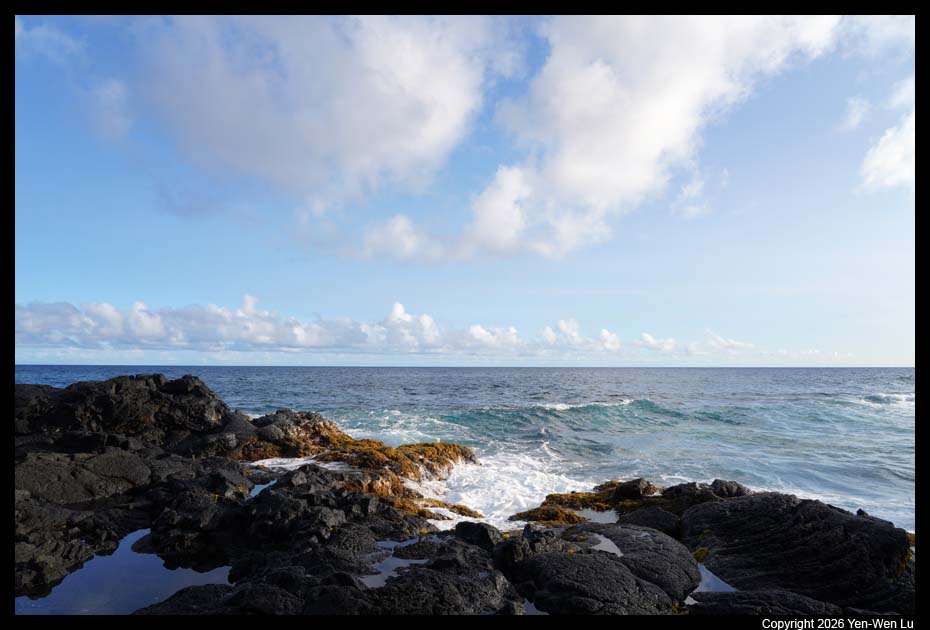
After a short break, we headed out to coast
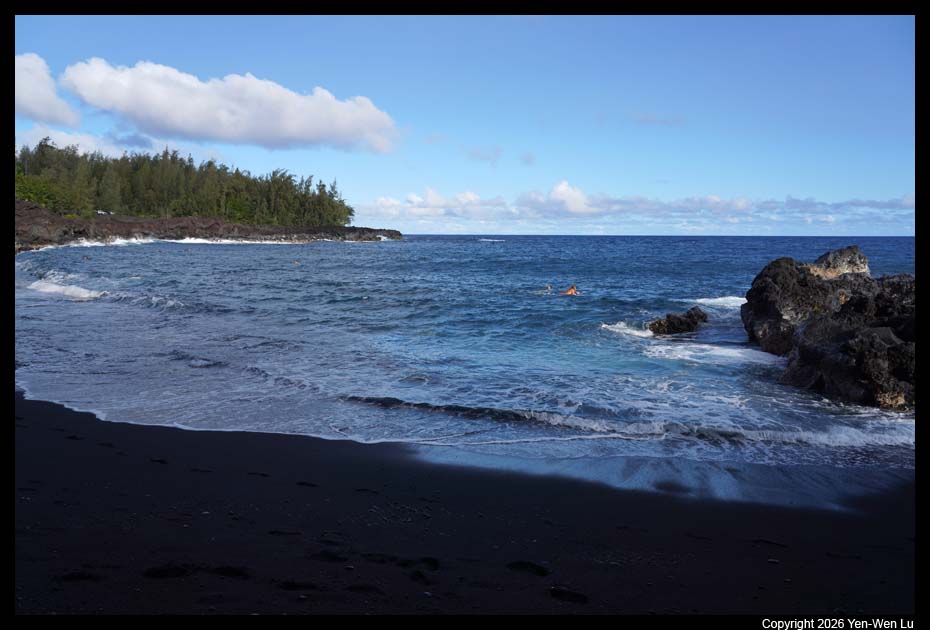
area along the Kalapana-Kapoho Road. We stopped at the Kehena Black
Sand Beach and scrambled the rocky trail down to the beach, and found out it
was a nude beach that there were many people naked here (so I had to put my
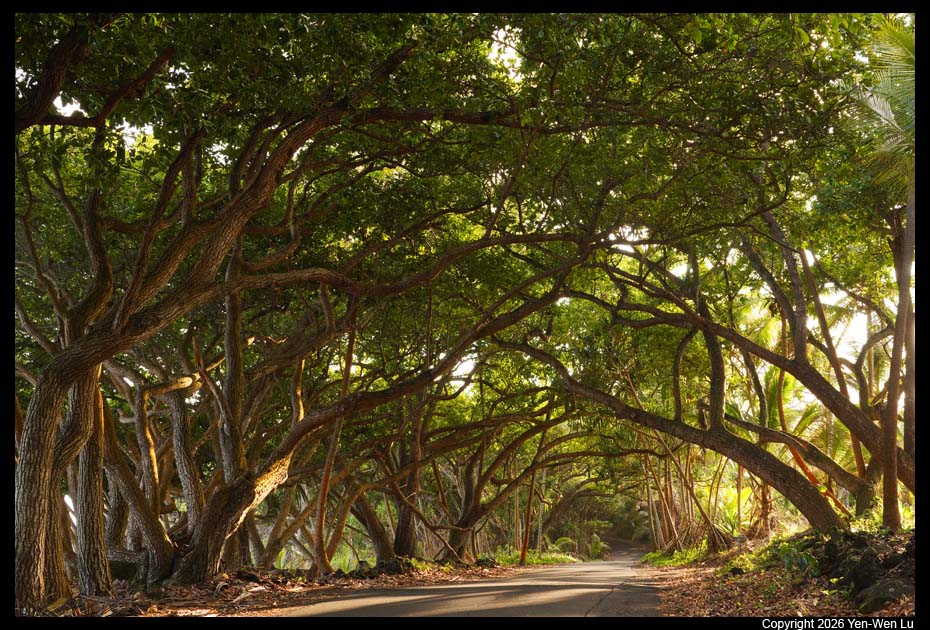
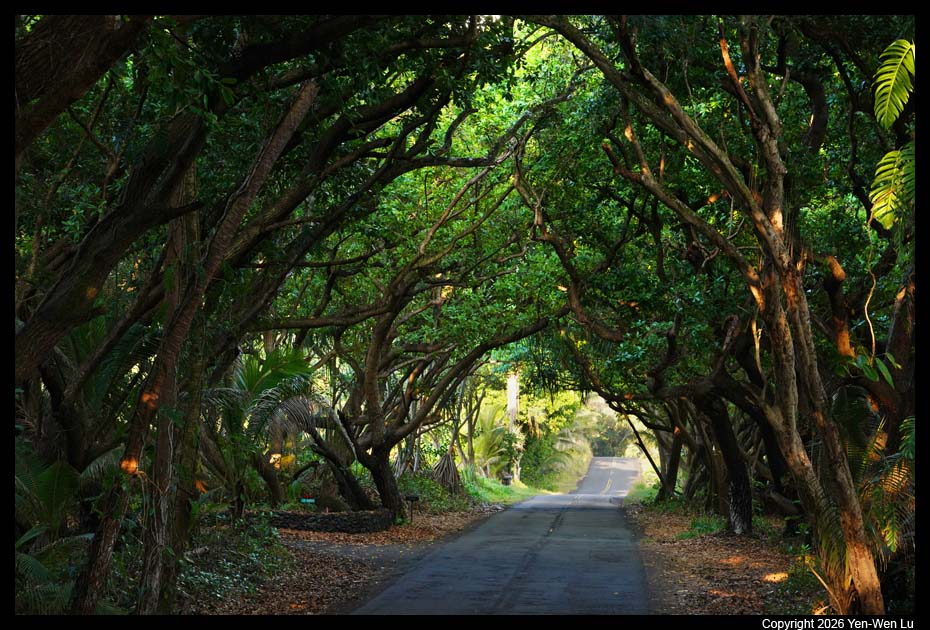
camera away :-)). We continued on the Kalapana-Kapoho Road and passed
through a few sections of beautiful
tree tunnels, and got to a
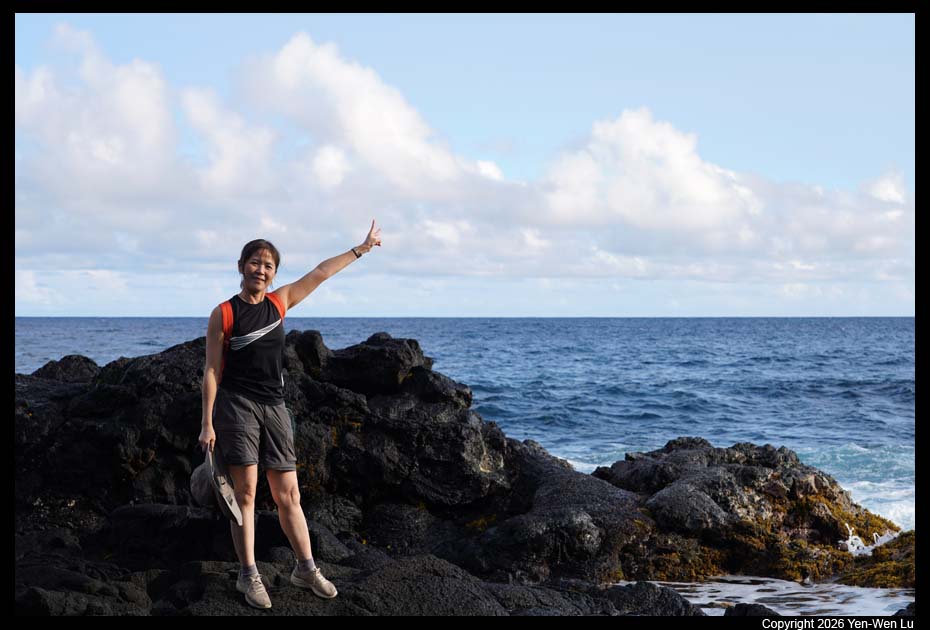
tide pool area near Opihikao.
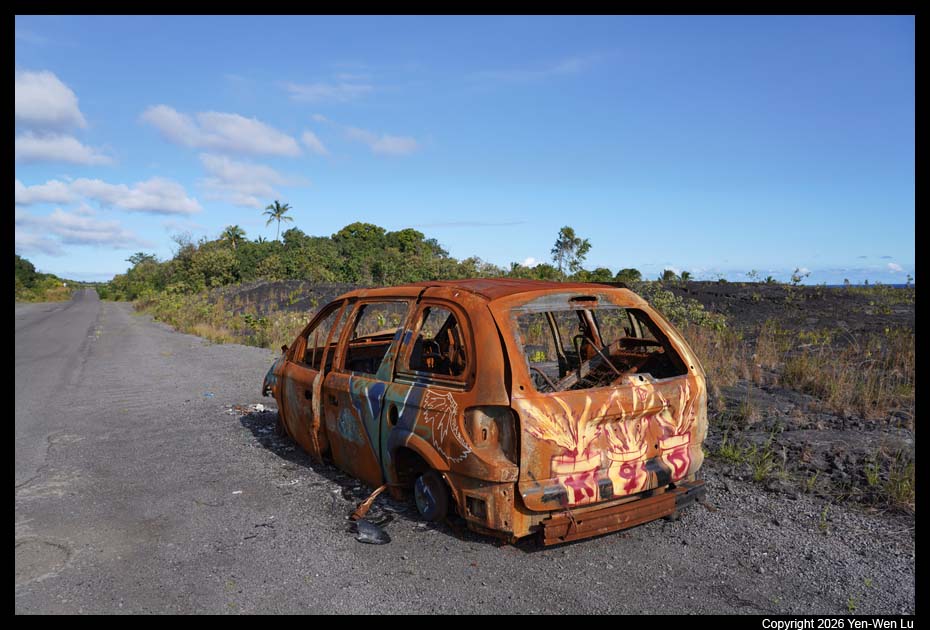
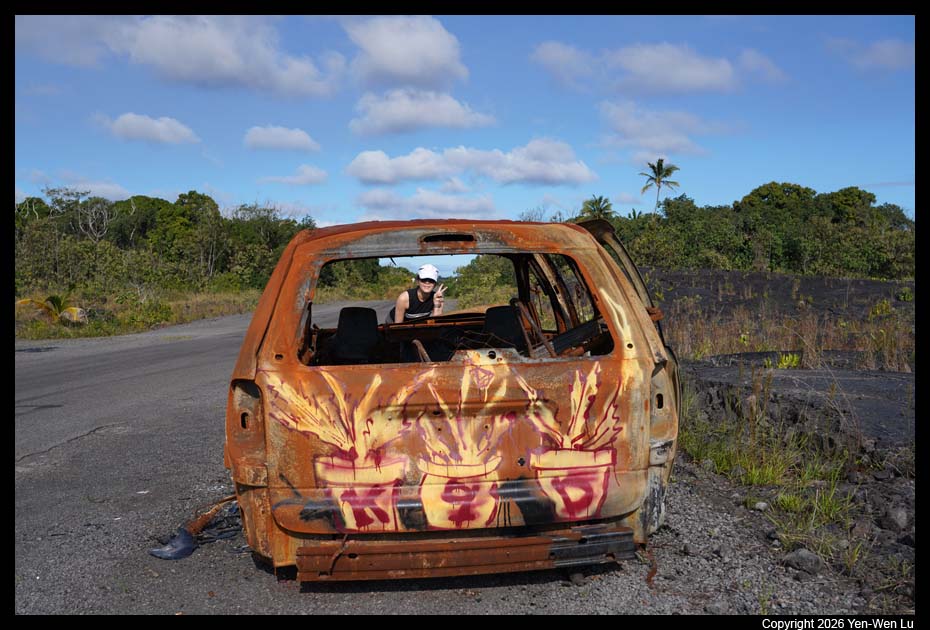
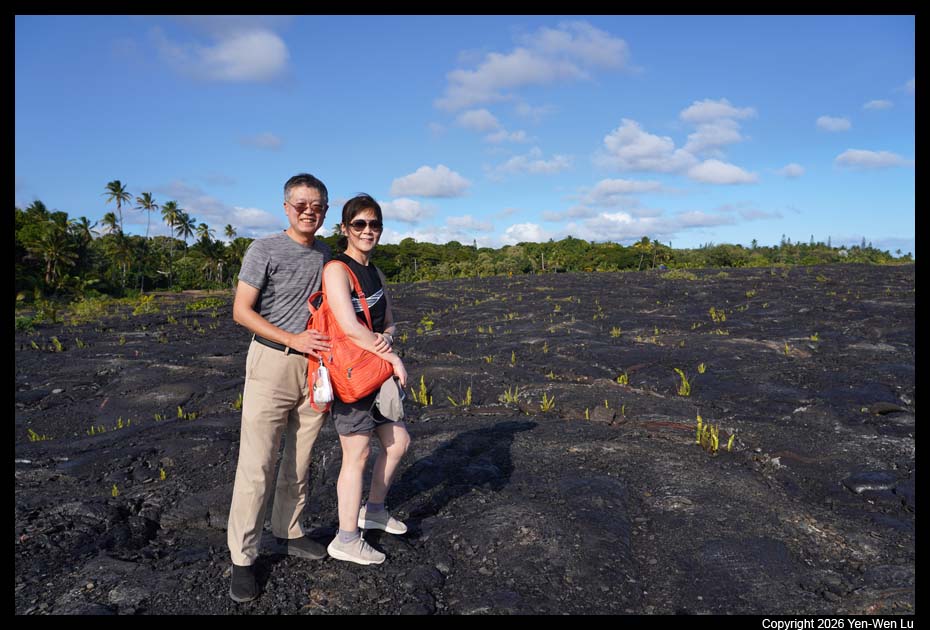
- Kaimu - Chain of Craters Road
We headed back to Kaimu - Chain of Craters Road
to the end of the road (on the other side of Chain of Craters Road in
Volcanoes National Park). It was actually just a few miles from
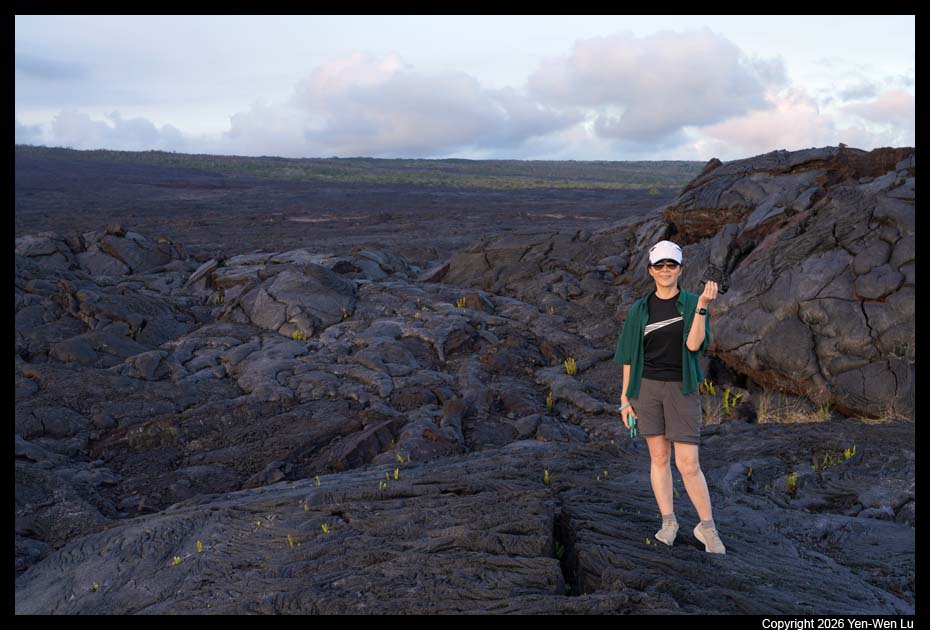
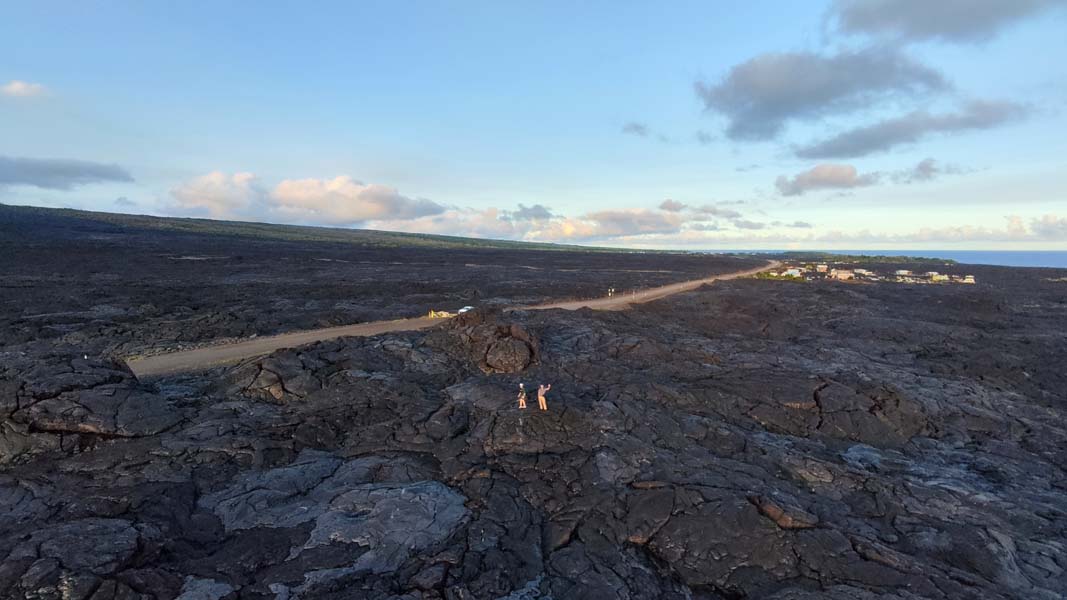
where we were at Holei Sea Arch in the park yesterday. We walked to
the lava field and played my new toy
HoverAir X1 ProMax
drone :-)
Day 4 (2/1) ...
-
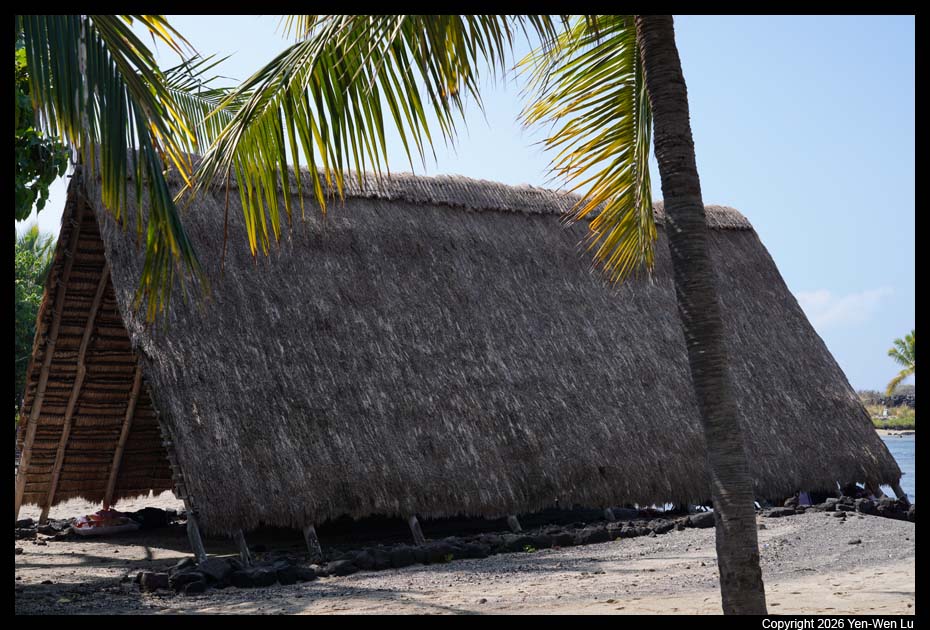
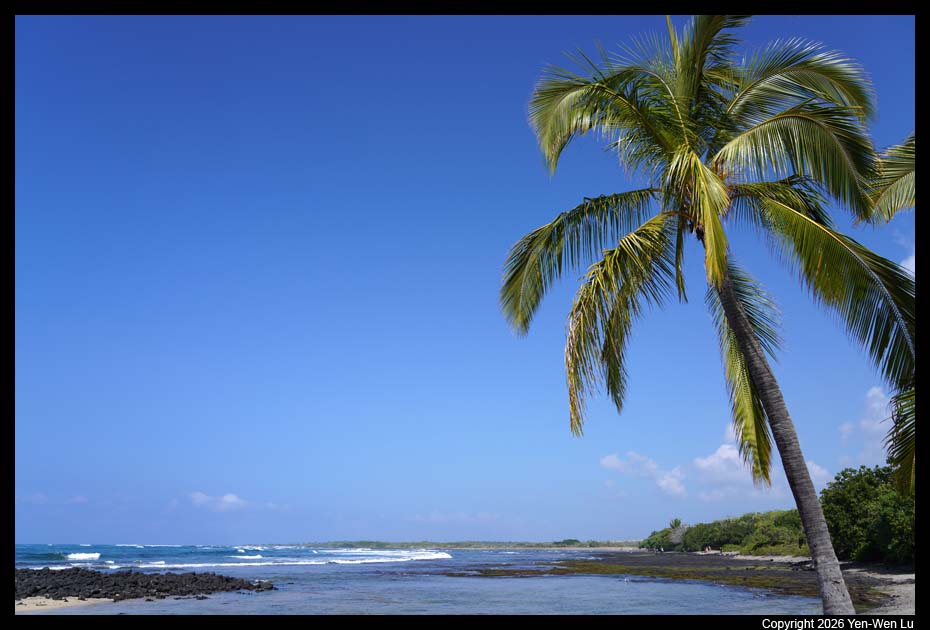
Kaloko-Honokohau National Historical Park
We left the Phoenix House at ~
8:30AM and drove back to Kona area to visit
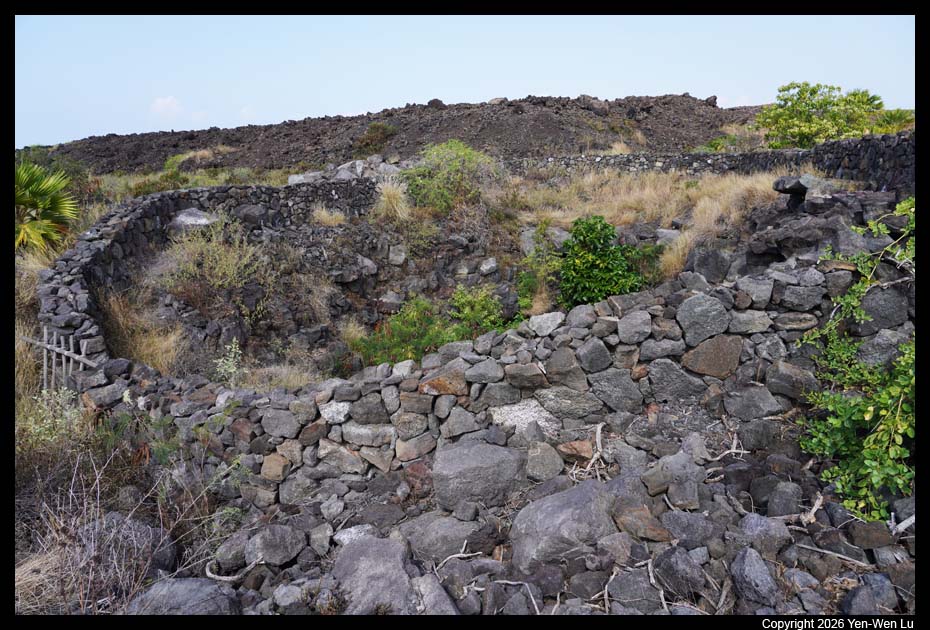
Kaloko-Honokohau National Historical Park. Within its approximately
1,200-acre boundary, the park protects the site of an ancient Hawaiian
settlement, the coastal portions of five different ahupua‘a (traditional
Hawaiian land divisions extending from the mountains into the sea).
Kānaka maoli (Native Hawaiians) employed ingenious fishing and agricultural
practices, and built large ponds to raise fish as a source of food.
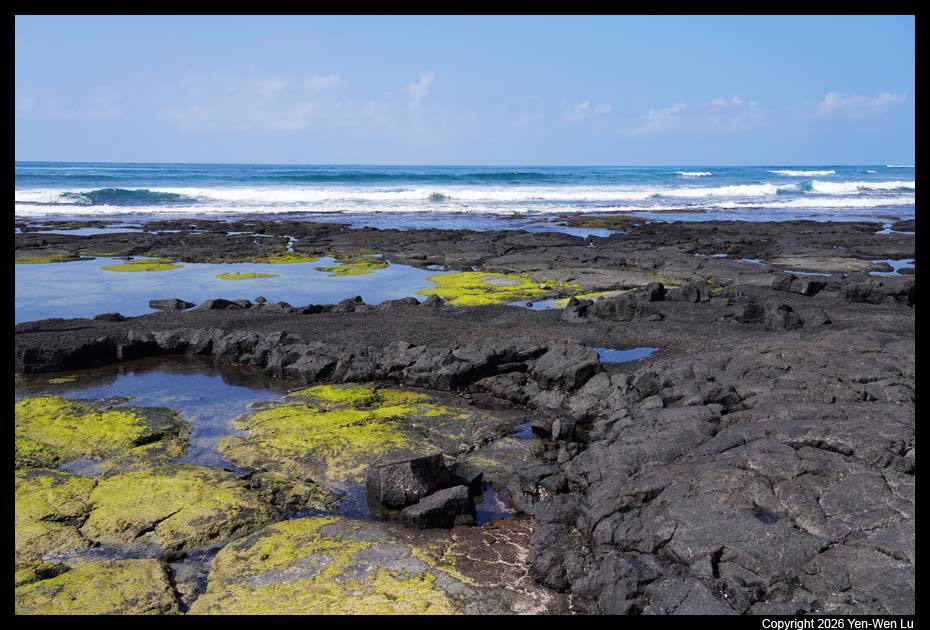
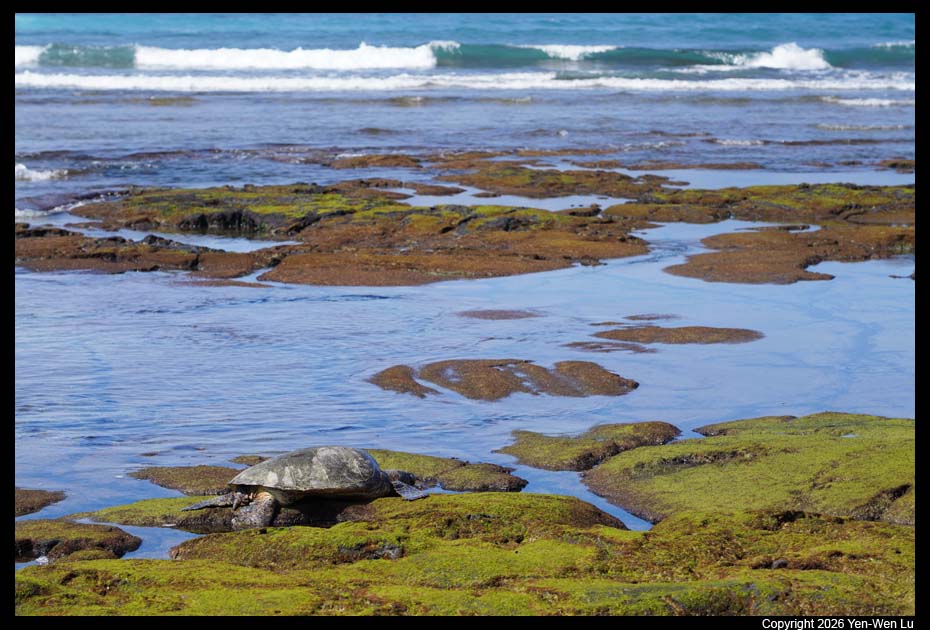
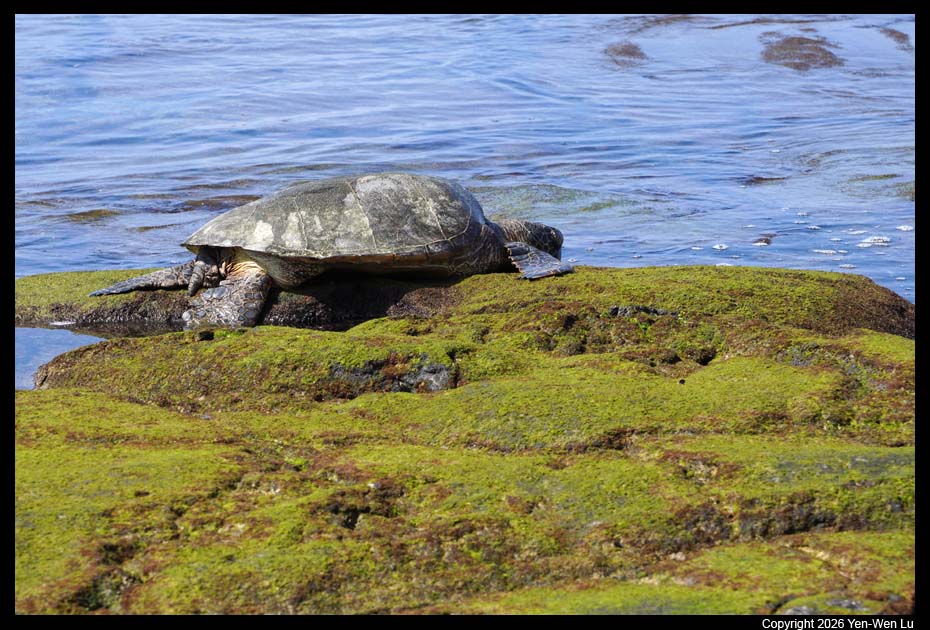
Green sea turtles can usually be seen basking here along the park's
shoreline.
Going Home ...
After the lunch at a nearby local shopping center, we were back to KOA
Airport at ~ 1:30PM for our flight back to SFO at 4PM. When we landed at
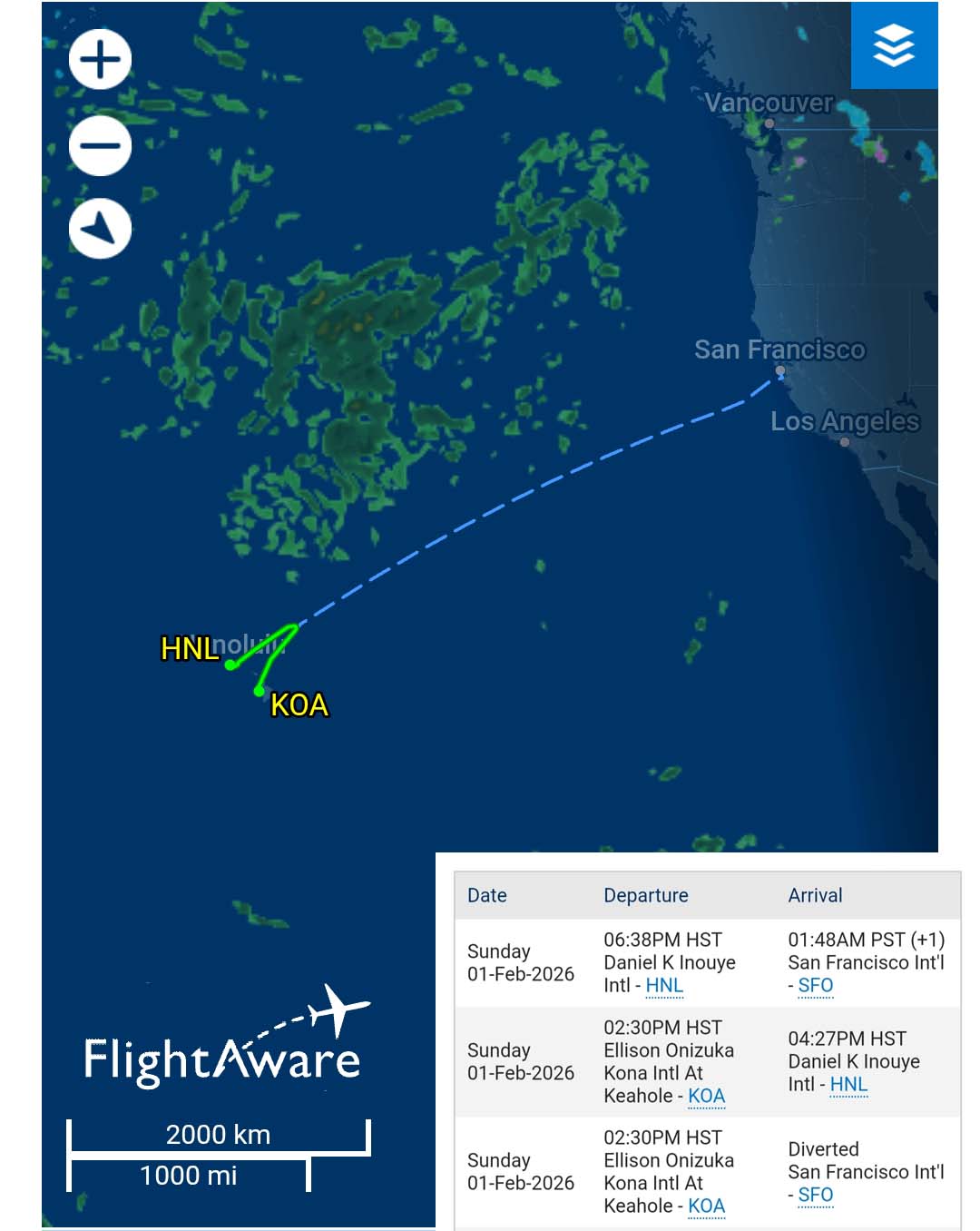
SFO at 10:50PM, I got a message from UA saying that our luggage was actually on
an earlier flight to SFO (UA1722 departing from KOA at 2:30PM), and it should
arrive before us. However, when I tried to track my bag via UA App, the
latest info was the scan when it was loaded on the plane at 2PM, but it was not
unloaded from the plane yet. When I checked the flight status of the
previous flight (UA1722), we were shocked to find out it was
diverted to Honolulu, and it has not arrived at SFO
yet. We had to go to UA customer service, and they offered free delivery
of the luggage to our home when it arrived tomorrow. We feel we were
so lucky that it was our luggage taking such a twisted detour, not us! :-)
[Back to Photo Page]
[Gallery]